
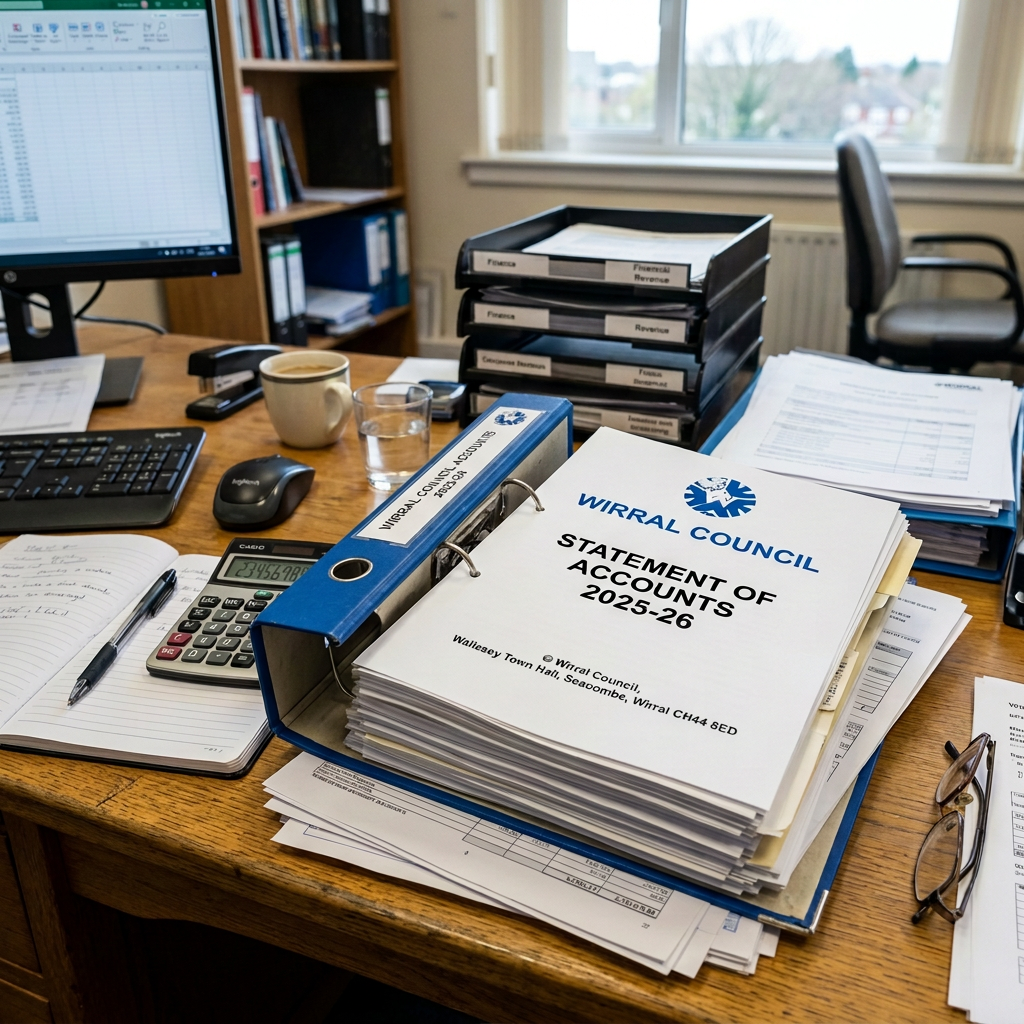

No. You could not make this up. Read on …
Email 1
Email 1. Sent on 9th July 2026
———- Forwarded message ———
From: Paul Cardin
Date: Thu, 9 Jul 2026 at 08:07
Subject: corrected version – FORMAL NOTICE OF INSPECTION: STATUTORY REQUEST FOR ACCOUNTS AND SUPPORTING RECORDS
To: danielkirwan@wirral.gov.uk danielkirwan@wirral.gov.uk, matthewbennett@wirral.gov.uk, Fin_publicinspection@wirral.gov.uk
Cc: Basnett, Paula (Councillor) paulabasnett@wirral.gov.uk
For the attention of the Section 151 Officer / Executive Director of Finance / Shaun Allen
Dear Section 151 Officer / Executive Director of Finance / Shaun Allen,
I am writing to explicitly set out my statutory inspection request.
To ensure a proportionate approach that places no unnecessary administrative burden on your team, please consider my targeted request set out below.
This request focuses exclusively on core accounting ledgers and active contracts, removing any need for broad manual corporate searches.
Please process the following request under Section 26 of the Local Audit and Accountability Act 2014:
As a local government elector for the Metropolitan Borough of Wirral, I am writing to exercise my explicit statutory right under Section 26 of the Local Audit and Accountability Act 2014 to inspect the Council’s accounting records and related documents during the current 30-working-day public rights window.
To ensure this request is strictly proportionate, manageable, and legally compliant with the definitions upheld in Moss v Royal Borough of Kingston upon Thames (2021), I am limiting my inspection exclusively to financial ledger records and active contracts related to specific asset transactions.
Please provide digital access to, or an inspection appointment for, the following specific items:
The Income Ledgers: All ledger entries recording rental income, wayleave fees, or site-share revenue received by Wirral Council from telecommunications operators during the 2025/2026 financial year.
The Associated Contracts: Copies of the underlying lease agreements, pavement permits, or wayleave contracts corresponding directly to those 2025/2026 telecommunications income streams (protected as inspectable “contracts” and “deeds” under Section 26(1) of the Act).
The Insurance Expenditure Records: The Council’s active Corporate Public Liability Insurance policy schedule for the 2025/2026 financial year, alongside the specific ledger receipt/voucher confirming the premium payment made to the insurer.
As these requests pertain directly to financial transaction ledgers, active revenue contracts, and expenditure vouchers, they sit firmly within the statutory scope of Section 26. They do not require broad manual narrative searches, thereby removing any grounds for rejection based on administrative burden.
Please confirm within the next 48 hours when these files will be made available for my inspection so that I may review them prior to the close of the statutory window.
I look forward to your swift response with the digital files and inspection dates,
Yours faithfully,
Paul Cardin
Wallasey
Merseyside
Response 1
The following inadequate response arrived four days later from officer Shaun Allen on 13th July 2026:
———- Forwarded message ———
From: FIN_PublicInspection, <Fin_publicinspection@wirral.gov.uk>
Date: Mon, 13 Jul 2026 at 09:51
Subject: RE: *corrected version* – FORMAL NOTICE OF INSPECTION: STATUTORY REQUEST FOR ACCOUNTS AND SUPPORTING RECORDS
To: Paul Cardin
Good morning, Mr Cardin,
Thank you for your enquiry. We will look into your request, it will take some time to investigate and collate, but we will aim to get the details to you by the end of July. I will advise if there is any delay beyond that date.
Many thanks,
Shaun
Email 2
Email 2. Sent on 13th July 2026
———- Forwarded message ———
From: Paul Cardin
Date: Mon, 13 Jul 2026 at 21:02
Subject: Public Notice of Inspection
To: Fin_publicinspection@wirral.gov.uk
Cc: matthewbennett@wirral.gov.uk, danielkirwan@wirral.gov.uk danielkirwan@wirral.gov.uk, Hall, Brenda (Councillor) brendahall@wirral.gov.uk, Shaw, Vicki L. (Wallasey Town Hall) vickishaw@wirral.gov.uk, Basnett, Paula (Councillor) paulabasnett@wirral.gov.uk, sarah.l.ironmonger@uk.gt.com
Dear Mr Allen,
Thank you for your response, however, aiming to respond to me at a later date is inadequate.
While I appreciate you looking into this matter, your proposal to delay production of these records until the end of July is legally unacceptable. It would effectively deny me my statutory rights.
The Local Audit and Accountability Act 2014 mandates that the inspection of accounting records must take place during the strict 30-working-day public rights window. Were you to defer my access until after this window has closed it would prevent me from exercising my right to raise formal objections with the local auditor.
Given the severe compliance risks associated with blocking or delaying statutory access, I have copied key senior officers and oversight figures into this correspondence for the reasons set out below:
• The External Auditor: Copied so they are immediately aware that the Council’s proposed timeline prevents a local elector from reviewing records within the lawful inspection window, directly disrupting the statutory audit process.
• The Chief Executive (Head of Paid Service): Copied to ensure executive visibility over an operational delay that exposes the local authority to legal non-compliance.
• The Monitoring Officer: Copied in fulfillment of their statutory duty under Section 5 of the Local Government and Housing Act 1989 to investigate and halt any acts or omissions by the Council that risk breaking the law.
• The Chair of the Audit and Risk Management Committee: Copied to ensure robust political and governance oversight regarding the obstruction of statutory transparency measures.
• The Leader of the Council: Copied so that the political leadership is fully apprised of executive actions that undermine public accountability.
As noted in my initial request, the scope of this inquiry has been intentionally restricted to transaction ledgers, specific active contracts, and an insurance voucher. As established in Moss v Royal Borough of Kingston upon Thames (2021), administrative convenience or internal resource pressure cannot be used to defeat a statutory right of inspection.
Please re-evaluate this timeline immediately to ensure Wirral Council remains compliant with its statutory duties.
I require written confirmation within the next 24 hours of either a digital release date or an inspection appointment that falls safely within the current public rights window.
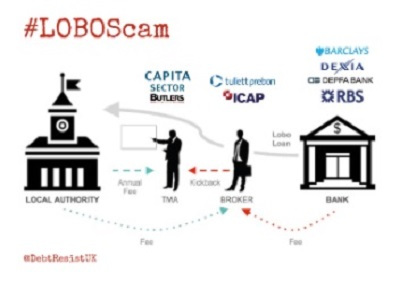
In year 2015/16 I successfully halted and froze Wirral Council’s accounts in the area of controversial £multi-million LOBO loans. Given my personal history, your current response could very well be interpreted as unfair, targeted discrimination,
Yours sincerely,
Paul Cardin
about.me/paul.cardin
Email 3
Email 3. Sent to Grant Thornton’s auditor on 19th July 2026
———- Forwarded message ———
From: Paul Cardin
Date: Sun, 19 Jul 2026 at 08:22
Subject: Obstruction and delay over statutory accounts inspection
To: sarah.l.ironmonger@uk.gt.com
Cc: matthewbennett@wirral.gov.uk, Basnett, Paula (Councillor) paulabasnett@wirral.gov.uk
Dear Ms Ironmonger,
I am writing to you in your capacity as the appointed external auditor for Wirral Metropolitan Borough Council under the Local Audit and Accountability Act 2014.
In the event I have the wrong person, please pass this message urgently to the Grant Thornton accountant dealing with Wirral Council.
I am a local elector for the Wirral area. I am writing to formally report that Wirral Council is currently obstructing and delaying my statutory right to inspect its accounts and accounting documents under Section 26 of the Act.
The Council published its Public Notice of Inspection for the 2025/26 accounts, establishing a strict 30-working-day window for public scrutiny. On 9th July 2026 (see attached email 1), which falls strictly within this active window, I submitted a formal request to the Council to inspect specific background documents, including:
The Income Ledgers: All ledger entries recording rental income, wayleave fees, or site-share revenue received by Wirral Council from telecommunications operators during the 2025/2026 financial year.The Associated Contracts: Copies of the underlying lease agreements, pavement permits, or wayleave contracts corresponding directly to those 2025/2026 telecommunications income streams (protected as inspectable "contracts" and "deeds" under Section 26(1) of the Act).The Insurance Expenditure Records: The Council's active Corporate Public Liability Insurance policy schedule for the 2025/2026 financial year, alongside the specific ledger receipt/voucher confirming the premium payment made to the insurer.
To date, the Council has failed to provide access, offering only delays and vague timelines.
I have emailed the Council on 9th July 2026 (see attached email 1) and 13th July 2026 (see attached email 2) in an attempt to obtain these documents yet I am faced with delays or non responses (see below).
As the National Audit Office (NAO) guidance clarifies, this 30-day window is a rigid statutory timeframe that you, as the auditor, have no legal power to extend. By delaying their response, Wirral Council is effectively running down the clock on my inspection period. This prevents me from identifying potential errors, checking value-for-money arrangements, or exercising my subsequent right under Section 27 to frame precise questions or lodge formal objections with you.
Given the severe financial stress and governance concerns highlighted in your recent Auditor’s Annual Report for Wirral Council, transparency during this public rights window is more critical than ever.
I urgently request that your audit team contacts the Director of Finance (S151 Officer) at Wirral Council to remind them of their mandatory duties under the Accounts and Audit Regulations. The Council must be instructed to provide immediate, unhindered access to the requested materials before my statutory window expires.
I have attached a full log of my correspondence with the Council’s finance team (emails 1 and 2) for your immediate review.
I have also copied this email to the council leader and CEO in an attempt to encourage them to resolve the errant conduct of junior officers under their charge,
Yours sincerely,
Paul Cardin
about.me/paul.cardin
Despite my request for a response by 14th July, six further days have elapsed with no response. I’ve notified the auditor, copied the above prompting email to Wirral Council today – 19th July – and I’m still no further forward. That’s a total of 10 days lost…
This process has now taken an unexpected turn…
Response 2
[[[[An email was received this morning (Monday 20th July) from Michael Green of Grant Thornton containing a useful attachment.
Michael Green has taken over from Sarah Ironmonger as Wirral Council auditor. His email also contained the following security caveat …
“Commercial in Confidence”.
This could appear on every one of his emails, OR it may have been done to prevent me exercising a blogger’s customary freedom of speech.
I’ve made enquiries via email and hopefully, the full email will be published here soon.]]]]
An important quote from Michael Green’s email:
“…delays you feel you are experiencing…”
I beg to differ, but as stated previously, I could have been granted access to these accounts on 10th July. It’s now 20th July. That’s an obvious, factual, on the record delay of 10 days.
Ultimately, if access is blocked by the council, I’m not sure who to turn to?!
The Citizen’s Advice Bureau is a dead end, and consulting my own solicitor would cost lots of money; money I don’t have access to.
Lack of funds put paid to my last qualifying objection to Wirral Council’s accounts.
Also, it looks like electors can only object to the accounts after inspecting them. And I don’t think that will be permitted to happen. That’s my gut feeling here after blogging on abusive Wirral Council for the last 15 years.
Email 4
Email 4. Sent on 20th July 2026
———- Forwarded message ———
From: Paul Cardin
Date: Mon, 20 Jul 2026 at 21:51
Subject: Re: Re – Obstruction and delay over statutory accounts inspection
To: Michael Green <Michael.Green@uk.gt.com>
Subject: Official Submission of Audit Evidence: Obstruction of Electors’ Rights – Wirral MBC Audit
Dear Mr. Green,
Thank you for your email and for confirming your role as the Engagement Lead for the Wirral MBC audit.
While you state this is not a matter you can help with, I am formally submitting this tracking of the Council’s silence as direct audit evidence. A council obstructing an elector’s statutory inspection rights is a material failure of governance and internal control.
I request that you formally take this obstruction into account as part of your audit under the following specific provisions of the Local Audit and Accountability Act 2014:
Breach of Section 26(1) (Inspection of Documents): This section gives any interested person the absolute right to inspect the accounting records and all related documents. The Council’s deliberate delay and lack of response constitute a direct obstruction of this statutory right.
Failure Under Section 20(1)(c) (Value for Money & Governance): You have a statutory duty to satisfy yourself that the authority has made proper arrangements for securing economy, efficiency, and effectiveness in its use of resources. A breakdown in statutory compliance and public transparency directly undermines the Council’s governance framework.
Auditor Powers Under Schedule 7 (Public Interest Reports): You hold independent, absolute powers to issue a Public Interest Report regarding any matter coming to your attention during the audit. The Council’s wilful obstruction of public accountability is a matter of significant public interest that warrants formal reporting.
The guide you attached outlines my rights, but the Council is actively blocking them. As the external auditor, you are the independent safeguard. If a local authority can simply ignore electors until the inspection window closes, the statutory process is rendered meaningless.
Please confirm that this evidence of Wirral MBC’s non-compliance will be formally logged and evaluated as part of your assessment of their governance and Value for Money arrangements.
I initially requested access to the following documents on 9th July 2026:
The Income Ledgers: All ledger entries recording rental income, wayleave fees, or site-share revenue received by Wirral Council from telecommunications operators during the 2025/2026 financial year.
The Associated Contracts: Copies of the underlying lease agreements, pavement permits, or wayleave contracts corresponding directly to those 2025/2026 telecommunications income streams (protected as inspectable “contracts” and “deeds” under Section 26(1) of the Act).
The Insurance Expenditure Records: The Council’s active Corporate Public Liability Insurance policy schedule for the 2025/2026 financial year, alongside the specific ledger receipt/voucher confirming the premium payment made to the insurer.
The Accounts inspection window closes on 10th August 2026.
Please also note: as of today, this matter is with the press.
Yours sincerely,
 | Paul Cardin about.me/paul.cardin |
26th July UPDATE
Six days later, and as Shaun Allen’s promised ‘end of July’ response date approaches, I’ve had no response at all to Email 4 from Michael Green at Wirral Council’s auditors Grant Thornton.
1st August UPDATE
As expected, I’ve received nothing from Shaun Allen (fin_publicinspection@wirral.gov.uk) despite him aiming to respond witth advice before the end of July 2026.
EMAIL 5
From: Paul Cardin
Date: Sat, 1 Aug 2026 at 09:30
Subject: Fwd: *corrected version* – FORMAL NOTICE OF INSPECTION: STATUTORY REQUEST FOR ACCOUNTS AND SUPPORTING RECORDS
To: <Fin_publicinspection@wirral.gov.uk>
Cc: <matthewbennett@wirral.gov.uk>, <danielkirwan@wirral.gov.uk>, Basnett, Paula (Councillor) <paulabasnett@wirral.gov.uk>
Dear Shaun Allen,
It’s 1st August 2026 and there is now a delay beyond the end of July.
Will you be aiming to advise me before the end of the accounts inspection window?
Best regards,
| Paul Cardin about.me/paul.cardin |
Response 3
24 days have now elapsed and I’ve got nowhere.
Here’s an email received on 3rd August 2026 from Shaun Allen of Wirral Council:
From: FIN_PublicInspection, <Fin_publicinspection@wirral.gov.uk>
Date: Mon, 3 Aug 2026 at 10:19
Subject: RE: *corrected version* – FORMAL NOTICE OF INSPECTION: STATUTORY REQUEST FOR ACCOUNTS AND SUPPORTING RECORDS
To: Paul Cardin, FIN_PublicInspection, <Fin_publicinspection@wirral.gov.uk>
Cc: matthewbennett@wirral.gov.uk <matthewbennett@wirral.gov.uk>, Kirwan, Daniel <danielkirwan@wirral.gov.uk>, Basnett, Paula (Councillor) <paulabasnett@wirral.gov.uk>
Dear Mr Cardin,
I apologise for the delay, I’m just waiting for clarification from a third party before sending the information, but yes we will certainly be responding before the closure of the inspection period.
Kind regards,
Shaun
Email 6
Email received from Wirral Council’s Shaun Allen on 5th August 2026:
From: FIN_PublicInspection, <Fin_publicinspection@wirral.gov.uk>
Date: Wed, 5 Aug 2026 at 09:29
Subject: RE: *corrected version* – FORMAL NOTICE OF INSPECTION: STATUTORY REQUEST FOR ACCOUNTS AND SUPPORTING RECORDS
To: Paul Cardin
Cc: Kirwan, Daniel <danielkirwan@wirral.gov.uk>, Bennett, Matthew <matthewbennett1@wirral.gov.uk>, Basnett, Paula (Councillor) <paulabasnett@wirral.gov.uk>, FIN_PublicInspection, <Fin_publicinspection@wirral.gov.uk>
Dear Mr Cardin,
Thank you again for your inspection request, and for subsequently setting out your concerns regarding access to the records requested during the public inspection period. I would like to reassure you that there is absolutely no intention on the Council’s part to block, delay unnecessarily, or otherwise deny your statutory rights of inspection. We fully recognise the importance of the public inspection process and the rights afforded to local electors under the relevant legislation.
The timescale previously indicated (31st July) was well within the public inspection period which concludes on 12th August, and reflects the practical work required to identify, collate, review and prepare the information requested. This involves liaising with a number of relevant officers, locating records, and ensuring that any information disclosed is accurate and appropriate for release. There has been a slight delay past the intended return date while we awaited third party confirmation.
Work has progressed as a priority, and I’m happy to attach the following:
1. Ledger transactions (telecoms / insurance);
2. Insurance schedule.
3. Insurance invoices and payments system screens confirming payment.
Unfortunately, I am unable to provide copies of lease agreements or contracts relating to the telecommunications income streams under sections 26 (4) (a) and 26 (5) (a) of the Local Audit and Accountability Act 2014, as these are protected on the grounds of commercial confidentiality.
Thank you for your patience and understanding while this work was undertaken.
Yours sincerely,
Shaun Allen
Senior Finance Manager
There were 6 attachments to the above email:
Nowhere within the above insurance documents can any reference be found to insurance cover for electromagnetic radiation, telecoms masts or digital infrastructure.
So this is compelling evidence that the Metropolitan Borough of Wirral is not insured for any claims that may arise connected to its 100+ 3G / 4G / 5G telecoms masts.
In the urgent interests of the health, safety and wellbeing of all 320,000 Wirral residents, I have now been forced to send the following email – detailing my objection – to Wirral Council’s external auditor, Michael Green of Grant Thornton Accountants:
Email 7
From: Paul Cardin
Date: Tue, 11 Aug 2026 at 18:42
Subject: Formal Notice of Objection to the Statement of Accounts 2025/26
To: Michael Green <Michael.Green@uk.gt.com>
Cc: <danielkirwan@wirral.gov.uk>, <matthewbennett@wirral.gov.uk>, Shaw, Vicki L. (Wallasey Town Hall) <vickishaw@wirral.gov.uk>, <Fin_publicinspection@wirral.gov.uk>
Dear Mr Green,
Under Section 27, Local Audit and Accountability Act 2014
OBJECTION
I am exercising my statutory right under Section 27 of the Local Audit and Accountability Act 2014 to formally object to the Metropolitan Borough of Wirral Council 2025/26 Statement of Accounts.
I object on the grounds that the Council has failed to maintain proper accounting arrangements, baseline risk entries, and asset valuation metrics concerning corporate land, property, and municipal structures leased or licensed to commercial partners, digital connectivity networks, advertising providers, and infrastructure entities (including, but not limited to, properties under the BAUER commercial lease portfolio or similar digital connectivity frameworks). This omission represents a material governance failure under the National Audit Office (NAO) Code of Audit Practice regarding Value for Money (VfM) arrangements and statutory risk
management.
BACKGROUND
Please note that evidence / sources are available on request.
For the past 3 years, I (together with several other members of the public) have written to Wirral Metropolitan Borough Council objecting to applications for telecoms masts. In my letters, I have provided extensive evidence of studies showing harm from electromagnetic radiation.
In all cases, whether an application was approved or refused, the response has been that the NPPF (2024) states that an LPA …“should not ………… set health safeguards different from the International Commission
guidelines for public exposure”
… and that the presence of an accompanying ICNIRP certificate and deemed
safety certificate was sufficient to protect the public from harm. This response effectively shuts down any health concerns raised by the public, many of which are backed by robust scientific evidence.
(NPPF = National Planning Policy Framework, ICNIRP = International Commission for Non-Ionising Radiation Protection.)
#99 – FORMAL OBJECTION to Auditor for WMBC – FINAL
This raises several issues, which are outlined below.
• Both the NPPF and ICNIRP guidelines are simply guidance. They are not statutory.
• ICNIRP certificates are not issued, validated or endorsed by ICNIRP, OFCOM or an independent body. All ICNIRP Certificates are self-certified.
• No validation is performed by WMBC of the details within the certificates, such as company or individuals named. In several instances, a dissolved company was given as the main declarant of the certificate. This was not a one-off “error”, and in allowing it to be brushed off as simply an “innocent error”, WMBC demonstrated a lack of robustness in its planning process.
• For many applications, no ICNIRP certificates are issued, such as for upgrades to existing masts (even though upgrades usually involve different technical specifications which will affect emissions).
• As stated by ICNIRP itself, individuals who have metal implants or AIMDs in their body are specifically excluded in the ICNIRP guidelines. This means that even if a certificate is issued, it does not guarantee protection for everyone.
From the information provided during the inspection window, WMBC does not lease any land to telecoms masts, although it has approved several 5G upgrades to masts already installed on roof tops and other land.
The concern is that WMBC …
• has approved mast applications / notifications with / without ICNIRP certificates, despite being informed of the shortfall in protection by ICNIRP and the potential harm.
This opens the door to future litigation which leads to expensive court cases, and potentially lifetime responsibility provided by the council for individuals affected. There have been legal cases which have cost the relevant councils substantial amounts, amounts which then fall to the taxpayer.
This is a risk which needs to be recognised by WMBC.
Health Effects from wireless technology and Electromagnetic Radiation is recognised by reinsurers as a high impact risk with regard to future litigation.
Lloyds of London has refused to insure against health effects from all wireless technology since 2010 (Exclusion 32).
Swiss Re in their Emerging Risks Report (May 2019) state:
“To allow for a functional network coverage and increased capacity overall, more antennas will be needed, including acceptance of higher levels of electromagnetic radiation. In some jurisdictions, the rise of threshold values will require legal adaptation. Existing concerns regarding potential negative health effects from electromagnetic fields (EMF) are only likely
to increase. An uptick in liability claims could be a potential long-term consequence…”
“As the biological effects of EMF in general and 5G in particular are still being debated, potential claims for
health impairments may come with a long latency.”
The insurance industry clearly recognises that potential claims for health impairments may come with a long latency. Cases of Cancer Clusters (and other serious adverse effects) have been recorded in areas in which a mast has been installed for several years.
#99 – FORMAL OBJECTION to Auditor for WMBC – FINAL
Recent studies are providing clear evidence of genetic changes, carcinogenic effects and other adverse effects from living close to masts.
In a patent application, telecoms company Swisscom disclosed the carcinogenic nature of the associated EMF/RF radiation. It also stated that the carcinogenic effects are non-thermal, whereas ICNIRP covers only thermal effects.
“These findings indicate that the genotoxic effect of electromagnetic radiation is elicited via a non-thermal pathway.
……………..Thus it has been possible to show that mobile radio radiation can cause damage to genetic material, in particular in human white blood cells, whereby both the DNA itself is damaged and the number of chromosomes
changed. This mutation can consequently lead to increased cancer risk. In particular, it could also be shown that this destruction is not dependent upon temperature increases, i.e. is non-thermal.
An ever-growing number of people now suffer with EHS (Electro Hypersensitivity), which is being exacerbated by the ubiquitous nature of masts, hubs, and digital screens in our environment. Symptoms can
range from stressful and unpleasant to downright debilitating to the point of making normal life impossible. This is a recognised condition.
The EMF and Health Working Group (EAHWG) of the UK government’s Committee on Medical Aspects of Radiation in the Environment (COMARE) stated in its minutes of July 2025 “it is clear that there are people
who suffer from EHS (electro hyper-sensitivity), the symptoms of which can be unpleasant and concerning to them and to their families. Sufferers are looking for comfort and explanations, but it is very difÏcult to provide
satisfactory explanations on the basis of available scientific evidence.”
EHS was also recognised by a tribunal court decision in 2022, where the court ruled that East Sussex County Council must secure special educational provision for a child who had electromagnetic hypersensitivity.
EHS sufferers are effectively the modern-day canaries in the coal mines clearly giving out warning signals that EMR does indeed produce adverse health effects.
I appreciate that, as auditor, your role is not to look at potential health effects. The main point, however, is that there are growing sections of the public who are susceptible to the effects of EMR, or who have AIMDs or metal implants in their bodies, thus the risk of future claims is growing by the day.
WMBC insurance is with Maven Public Sector and Aon UK Limited.
There is no reference to EMR or Telecoms masts in the Maven Public Sector and Aon UK Limited documentation sent to me during this inspection window. Furthermore, in response to my Freedom of Information request sent in 2024, which requested:
“Please would the Council send me the exact clause in their public liability insurance that shows that the Council is indemnified against claims on the Council for harm caused by EMF radiation?”
Wirral Metropolitan Borough Council (without providing any evidence of indemnity), stated:
“We can confirm that the liability insurance in force covers
the Council in respect of its legal liabilities arising from its business
activities, subject to terms and conditions. The policy documentation does
not identify specific risks or specific scenarios for which it is insured
and therefore policy documentation will not reference cover for
electromagnetic radiation.”
The solicitor for the campaign group “Stop 5G Bath” received a letter from Public Health England’s own solicitors, DLA Piper (dated 08-Aug-2019), which exempted PHE from all liability in the event of future legal action relating to health effects from 5G if their guidance should turn out to be incorrect or misleading. In this letter they state:
“A public body must determine how much weight to put on the PHE guidance. Equally that body must determine what other evidence from your client or other members of the public or interested parties to consider in making any decision. If it be alleged that a public body now or in the future acted unlawfully in placing reliance on the guidance, that cannot retrospectively taint the guidance with illegality.”
“PHE’s lawyers advise public bodies to balance PHE’s guidance with evidence from other sources i.e. not only from ICNIRP. This contradicts the government’s own planning regulations which require local authorities to
adhere strictly to ICNIRP’s guidelines…This gives no choice to public bodies about accepting a potentially catastrophic risk.”
#99 – FORMAL OBJECTION to Auditor for WMBC – FINAL
GROUNDS FOR OBJECTION
Ground A: Non-Compliance with Asset Impairment Regulations (IAS 36) across Broad Commercial and Connectivity Leases.
Under the CIPFA Code of Practice on Local Authority Accounting and IAS 36 (Impairment of Assets), the Council must ensure that its assets are carried at no more than their recoverable amount.
The Council hosts wireless transmission equipment across its broad commercial property portfolio. This spans beyond traditional, standalone macro telecommunications masts to encompass indirect commercial
leases, smart municipal assets, digital advertising panels, and connectivity infrastructure equipped with 4G/5G capabilities.
Standard global underwriting practices apply a strict, universal Electromagnetic Radiation (EMR) Exclusion (such as Lloyd’s of London Underwriters CFC Wording / Exclusion 32) to commercial public liability policies.
This classification treats telecommunications and radio frequency radiation alongside asbestos as an uninsurable operational exposure.
By hosting wireless, digital, or smart infrastructure carrying an uninsurable operational risk on its land or structures, the Council is exposing public funds to unmitigated liabilities while potentially restricting the long-
term marketability, use, and capital value of these holdings. The Council has entirely failed to declare, review, or calculate asset impairment under IAS 36 to reflect this uninsurable liability status and land-use constraint
on the face of its balance sheet.
Ground B: Unmitigated Counterparty Credit Risk and Indemnity Reliance (IFRS 9)
The Council relies on boilerplate third-party corporate indemnities within its commercial, advertising, and connectivity leases to protect public funds from operational damages and third-party injury claims. Under
IFRS 9 (Financial Instruments), local authorities must actively assess and manage counterparty credit and default risk.
An indemnity clause is a financial instrument only as robust as the tenant’s remaining corporate balance sheet. Major digital, media, and telecommunications operators explicitly state in their investor risk
disclosures that they cannot obtain commercial insurance for long-term radiofrequency radiation (RFR) liabilities.
In the event of a systemic, market-wide, or catastrophic uninsurable claim, a tenant’s corporate structure faces immediate insolvency risk, transferring the ultimate financial liability directly back to Wirral Metropolitan Borough Council as the freeholder or site owner. The Council’s accounts fail to demonstrate that any financial stress-testing has been conducted against the insolvency risk of commercial tenants operating with industry-wide insurance exclusions.
Ground C: Structural Failure of the Strategic Risk Register, Uninsured Exposure, and Blanket Dismissal of Public Scrutiny (VfM Breach)
The Council has historically maintained a passive policy posture, blindly following International Commission on Non-Ionising Radiation Protection (ICNIRP) compliance certificates to ignore and dismiss valid public
safety and financial risk concerns raised by residents. This defence is factually, legally, and logically flawed, creating a profound governance void under the NAO Code of Audit Practice regarding statutory Value for
Money (VfM):
1. The Corporate Risk Register: On searching through the WMBC corporate risk register there is no mention at all of EMR RF harm or risk or any stress tests, or risk mitigation metrics concerning uninsurable Radio Frequency (RF) liabilities, digital asset exposures, or global public liability exclusions. By acknowledging it holds no risk entries, the Council confirms it has failed to investigate, quantify, or manage its exposure
2. The ICNIRP Safety & Liability Gap: The Council’s blanket reliance on ICNIRP is structurally flawed because the official ICNIRP 2020 Statement of Principles explicitly admits:
#99 – FORMAL OBJECTION to Auditor for WMBC – FINAL
“Other types are not [considered by ICNIRP], for example, heating of metallic objects in the body, such as prostheses, or an influence on the operation of medical devices such as pacemakers. The latter electromagnetic interference effects are of a technical nature and do not fall within the remit of ICNIRP.”
Because ICNIRP explicitly excludes medical device interference from its safety remit, an ICNIRP certificate does not provide a comprehensive shield against civil personal injury claims. Vulnerable residents with pacemakers or active implants are left entirely unprotected by these guidelines.
3. The Governance Breakdown: If a resident suffers a medical emergency due to interference from equipment leased or permitted on Council-owned land or structures, the Council faces unlimited financial liability under civil law because its municipal insurers explicitly exclude EMR/EMF claims.
Failing to record this identified, structurally uninsurable financial exposure on the Strategic Risk Register — and using ICNIRP compliance to bypass proper executive risk scrutiny and public concern—constitutes a
significant weakness in governance arrangements.
This failure of internal control introduces unquantified financial liabilities arising from universal insurance exclusions on digital connectivity, telecommunications, and commercial infrastructure portfolios (such as the
BAUER portfolio). The Council’s complete exclusion of these material financial threats from its Strategic Risk Register and Annual Governance Statement (AGS) constitutes a direct breach of proper practice under the
CIPFA/Solace framework (Delivering Good Governance in Local Government).
This omission directly violates Principle F (Managing risks and performance through robust internal control and strong public financial management), which legally mandates that local authorities maintain a comprehensive risk framework that accurately captures all vulnerabilities threatening organisational financial resilience. By leaving these localised asset exposures unrecorded, the Council has failed to provide a robust or accurate statutory assurance review.
While the ultimate determination of risk ownership rests with the Council’s executive management, the Appointed Auditor is urged to evaluate whether this omission causes the statutory AGS to be fundamentally misleading. Consequently, I request that Michael Green – the External Auditor – investigates the Council’s methodology for valuing and risk-assessing these technically uninsurable assets and determine whether this non-disclosure constitutes a significant weakness under the National Audit OfÏce (NAO) Code of Audit Practice. Should the Council decline to immediately update its risk registries and amend its disclosures, the Auditor is requested to exercise formal statutory pressure—either by documenting a Significant Weakness within their Value for Money (VfM) commentary, appending an ‘Other Matter’ notification to the final audit report, or issuinga Public Interest Report under Section 24 (Schedule 7) of the 2014 Act to compel the implementation of a lawful risk-management framework.
For the avoidance of doubt, the Council’s failure to log, quantify, and report these uninsurable infrastructure risks constitutes a direct violation of multiple statutory duties and proper accounting practices.
Specifically, the Council is in breach of:
1. Regulation 5 of the Accounts and Audit Regulations 2015, which legally mandates the maintenance of a robust, comprehensive system of internal control and active risk management.
2. Principle F of the CIPFA/Solace Framework (Delivering Good Governance), by failing to maintain a transparent, ‘live’ risk register that captures all material vulnerabilities threatening organisational financial resilience.
3. Section 3.4 of the CIPFA Code of Practice on Local Authority Accounting, which strictly requires the identification and formal disclosure of open-ended Contingent Liabilities—a requirement directly triggered here because municipal insurers explicitly exclude EMR/EMF civil claims, leaving the
Council with unmitigated, unlimited financial exposure.
4. The National Audit OfÏce (NAO) Code of Audit Practice, under which the Council’s documented risk blindness and lack of operational stress-testing create a definitive ‘Significant Weakness’ in its governance and Value for Money (VfM) arrangements.
#99 – FORMAL OBJECTION to Auditor for WMBC – FINAL
Statutory Action Requested
I request that the External Auditor exercises their statutory powers under the Local Audit and Accountability Act 2014 to:
• Inquire into the Council’s method for valuing and risk-assessing assets subject to universal insurance exclusions and technical safety gaps, spanning both direct telecom leases and indirect commercial / digital infrastructure contracts (such as the BAUER portfolio).
• Determine whether the Council’s total failure to log these financial threats on the Strategic Risk Register, alongside its reliance on ICNIRP guidelines to dismiss public risk concerns, constitutes a significant weakness in its governance and Value for Money arrangements.
• Consider issuing a Public Interest Report under Section 24 (Schedule 7) of the Act to ensure the Council establishes proper risk-management frameworks for uninsurable commercial and digital
leasing activities.
I would be grateful for an acknowledgment of receipt of this email and formal notice from both the Council’s financial leadership and the Appointed Auditor,
Yours sincerely,
Paul Cardin
Email 8 – 7th August 2026
I also sent the following email to Wirral Council’s senior financial staff today:
From: Paul Cardin
Date: Fri, 7 Aug 2026 at 12:08
Subject: Formal Notice of Inspection and Request for Information: Telecommunications Contracts, Third-Party Insurances, and Financial Exposure Assessments
To: <Fin_publicinspection@wirral.gov.uk>, <danielkirwan@wirral.gov.uk>, <matthewbennett@wirral.gov.uk>, Shaw, Vicki L. (Wallasey Town Hall) <vickishaw@wirral.gov.uk>
Cc: Basnett, Paula (Councillor) <paulabasnett@wirral.gov.uk>
Date: 7 August 2026
From: Paul Cardin [Wirral Residents Association]
To: Director of Finance (Section 151 Officer) /the chief executive/the monitoring officer
Council Name: Wirral Metropolitan Borough Council
URGENT: Submission under the 2025/2026 Statutory 30-Day Public Audit Inspection Window
Dear Sir / Madam,
Under the statutory provisions of the Local Audit and Accountability Act 2014 (Sections 25 and 26) and the Accounts and Audit Regulations 2015, I am exercising my right as a local government elector or interested person to inspect the Council’s accounts, books, deeds, contracts, bills, vouchers, and receipts for the financial year ending 31 March 2026.
To the extent that any requested narrative or assessment falls outside the strict definition of accounting records, please also treat those specific elements as a formal request under the Freedom of Information Act 2000 (FOIA) and the Environmental Information Regulations 2004 (EIR) (specifically regarding electromagnetic radiation as an environmental factor under EIR Regulation 2(1)).
Please provide and make available for inspection the following documentation:
1. Operator Third-Party Policies
Copies of all active agreements, deeds, licenses, and leases between the Council and telecommunications infrastructure operators, specifically including:
- Insurance Certificates: The active Public Liability Insurance certificates.
- Indemnity Policies: All third-party indemnity policies.
- Underwriting Schedules: The underwriting schedules attached or related to the telecom agreements.
This request explicitly encompasses policies and schedules held by the principal contracting party as well as any parent, sister, or joint-venture infrastructure operators that own, manage, or operate the physical transmission hardware on Council property or assets. This includes, but is not limited to, Cellnex UK Limited, MBNL (Mobile Broadband Network Limited), or any equivalent infrastructure management entities.
2. Financial Exposure Assessments
All internal records, reports, and communications regarding the Council’s financial risk relative to these installations, specifically:
- Risk Assessments: All internal risk assessments or liability allocations evaluating the financial exposure of the Council.
- Finance Briefings: All Finance Department briefings or memos evaluating unhedged taxpayer liabilities.
- Exclusion Clause Evaluations: Any assessment of financial exposure to the Council in the event that any of the aforementioned operators’ underwriters invoke an “Electromagnetic Field / Non-Ionising Radiation” exclusion clause to deny a claim.
Next Steps and Timeline
As this request is submitted during the formal 30-day public audit window, I look forward to your prompt confirmation of when and how these documents will be made available for inspection. If any elements are to be provided electronically via FOIA/EIR channels, I expect a response within the statutory 20-working-day limit.
If you intend to redact any portion of these documents under commercial confidentiality or any other exemption, please provide a specific statutory justification for each redaction, alongside an explanation of how the public interest test was applied.
In accordance with my statutory rights, this request must be actioned and my appointment to view the details arranged prior to the closing of the public rights access window on 12th August 2026,
Thank you for your assistance.
Yours faithfully,
Paul Cardin [Wirral Residents Association]
Here’s the response, an open admission that over 100 Wirral telecoms masts have no insurance cover:
From: FIN_PublicInspection, <Fin_publicinspection@wirral.gov.uk>
Date: Wed, 12 Aug 2026 at 10:15
Subject: RE: Formal Notice of Inspection and Request for Information: Telecommunications Contracts, Third-Party Insurances, and Financial Exposure Assessments
To: Paul Cardin
Cc: Basnett, Paula (Councillor) <paulabasnett@wirral.gov.uk>, FIN_PublicInspection, <Fin_publicinspection@wirral.gov.uk>, Kirwan, Daniel <danielkirwan@wirral.gov.uk>, Bennett, Matthew <matthewbennett1@wirral.gov.uk>, Shaw, Vicki L. <vickishaw@wirral.gov.uk>
Dear Mr Cardin,
Thank you for your email.
Having reviewed your request, Wirral Council does not hold any such active agreements with telecommunications infrastructure operators of the type described. As a result, the Council does not hold the related supporting documents requested.
Accordingly, there are no documents available for inspection in relation to the information specified in your request.
Yours sincerely,
Shaun Allen
Senior Finance Manager
12th August 2026
Michael Green of Grant Thornton – Wirral Council’s external auditor – also responded today to my 7th August email. His email contains a very unhelpful catch-all phrase: “Commercial in Confidence”, so I’m unable to reproduce it here.
However, in summary, he acknowledged receipt, said he would act upon the information contained and would respond ‘in due course’.
Wirral Council’s accounts viewing window closed today.
WATCH THIS SPACE
Wirral Council’s 2026 “NOTICE OF PUBLIC RIGHTS” document
(my emphasis / italics):
Wirral Metropolitan Borough Council
AUDIT OF ACCOUNTS YEAR ENDED 31ST MARCH 2026
NOTICE OF PUBLIC RIGHTS
The Accounts and Audit Regulations 2015
Local Audit and Accountability Act 2014
The Accounts and Audit (Amendment) Regulations 2024
Notice is hereby given under Regulation 15 (2 and 3) of the Accounts and Audit Regulations 2015 that the unaudited statement of accounts which may be subject to change for the year ended 31 March 2026 will be published on the Council’s website at: https://www.wirral.gov.uk/about-council/budget-and-spending/annual-accounts.
The period for the exercise of public rights under the Local Audit and Accountability Act 2014 and updated by The Accounts and Audit (Amendment) Regulations 2024,
is required to include the first 10 working days of July.
The accounts and other documents are available for inspection at Council’s offices at Wallasey Town Hall, Brighton Street, Wallasey, Wirral, CH44 8ED. Please email Shaun Allen at Fin_publicinspection@wirral.gov.uk to make an appointment.
Notice is given that from 1 July 2026 to 12 August 2026 (Inclusive) between 10:00 hours and 16:00 hours on weekdays any person may inspect the accounting records for the financial year to which the audit relates. The accounting records include all books, deeds, contracts, bills, vouchers, receipts and other related documents to those records and they may make copies of all or any part of those records or documents, as required under Section 25 of the Local Audit and Accountability Act 2014 (The Act), except as provided for in Section 26 of The Act.
Notice is given that from 1 July 2026 to 12 August 2026 (Inclusive) a local government elector for any area to which the accounts relate, or their representative, may ask the auditor questions about the accounts as set out in Section 26 of The Act.
Notice is given any such elector may make objections to the auditor, under Section 27 of The Act during this period, relating to any matter where the auditor could take action under:
• Section 28 of The Act, namely, to apply to the court for a declaration that an item in the accounts is contrary to law; and/or
• Section 24 and paragraph 1 of schedule 7 of The Act, namely, to make a report in the public interest.
Any objection, and the grounds on which it is made, must be sent to the auditor in writing, with a copy to Shaun Allen, Senior Finance Manager, at the following email address Fin_publicinspection@wirral.gov.uk. Any objection must state the grounds on which the objection is being made and particulars of the objection.
Objections should be directed to the auditor, Michael Green of Grant Thornton UK LLP (Landmark, St Peter’s Square, 1 Oxford Street, Manchester M1 4PB
(direct) +44 (0)161 953 6382 email michael.green@uk.gt.com).
• A guide to your rights can be found at: National Audit Office: Local authority accounts – a guide to your rights
30 June 2026
Daniel Kirwan
Interim Director of Finance (S151 Officer)
Wallasey Town Hall
Brighton Street
Wallasey
Wirral
CH44 8ED
danielkirwan@wirral.gov.uk
FoI (EIR) Request 1 – 20th August 2026
https://www.whatdotheyknow.com/request/rf_towers_and_street_hub_infrast#incoming-3526397
FoI Request 2 – 20th August 2026
https://www.whatdotheyknow.com/request/corporate_risk_register_4
Return to Bomb Alley 1982 – The Falklands Deception, by Paul Cardin
Amazon link















 attached to these. If there’s a fault in one cell and it catches fire, the rest ‘come out in sympathy’ and catch fire also. If they race into what’s called “Thermal Runaway”, they can take days and days to extinguish.





























John Brace left an annotation ()
Yes I’m following this one by email as of yesterday, as I have more info on it already. Next time I see Surjit Tour I’ll remind him.