

-
Recent Posts
- 🟠 THE SPARK FOR A NEW GLOBAL CONFLICT? THE AGENDA BEHIND PUBLICIZING MIL…
- What did a UK Prime Minister say in 1945?
- How to Build a Universe That Doesn’t Fall Apart Two Days Later
- ‘Spike protein was designed to kill…’: Dr McCullough drops chilling COVI…
- Warren Thornton talks to Peter Ford, former British Ambassador
Categories
- #Brickgate
- 5G
- 5G alleged fraud
- Alleged Planning Crimes
- Angela Eagle
- BIG Fund Scandal
- Big Pharma Control / Deception
- censorship
- Cheshire West FoI ban
- COVID-19
- Criminal Asif Hamid
- digital-id
- Discretionary Housing Payments
- Election 2023
- Fake 'vaccines'
- FoI Requests
- Frank Field
- General
- Human Rights
- Labour Party Upheaval
- Press Freedom / Assange
- SARS-COV-2
- SOLAR
- Solar Farms
- The Duran eBooks
- Uncategorized
- Vote Rigging
- Whistleblowing
- Wirral Council Scandal
- Workplace trouble
Archives
- October 2026
- September 2026
- August 2026
- July 2026
- June 2026
- May 2026
- April 2026
- March 2026
- February 2026
- January 2026
- December 2025
- November 2025
- October 2025
- September 2025
- August 2025
- July 2025
- June 2025
- May 2025
- April 2025
- March 2025
- February 2025
- January 2025
- December 2024
- November 2024
- October 2024
- September 2024
- August 2024
- July 2024
- June 2024
- May 2024
- April 2024
- March 2024
- February 2024
- January 2024
- December 2023
- November 2023
- October 2023
- September 2023
- August 2023
- July 2023
- June 2023
- May 2023
- April 2023
- March 2023
- February 2023
- January 2023
- December 2022
- November 2022
- October 2022
- September 2022
- August 2022
- July 2022
- June 2022
- May 2022
- April 2022
- March 2022
- February 2022
- January 2022
- December 2021
- November 2021
- October 2021
- September 2021
- August 2021
- July 2021
- June 2021
- May 2021
- April 2021
- March 2021
- February 2021
- January 2021
- December 2020
- November 2020
- October 2020
- September 2020
- August 2020
- July 2020
- June 2020
- May 2020
- April 2020
- March 2020
- February 2020
- January 2020
- December 2019
- November 2019
- October 2019
- September 2019
- August 2019
- July 2019
- June 2019
- May 2019
- April 2019
- March 2019
- February 2019
- January 2019
- December 2018
- November 2018
- October 2018
- September 2018
- August 2018
- July 2018
- June 2018
- May 2018
- April 2018
- March 2018
- February 2018
- January 2018
- December 2017
- November 2017
- October 2017
- September 2017
- August 2017
- July 2017
- June 2017
- May 2017
- April 2017
- March 2017
- February 2017
- January 2017
- December 2016
- November 2016
- October 2016
- September 2016
- August 2016
- July 2016
- June 2016
- May 2016
- April 2016
- March 2016
- February 2016
- January 2016
- December 2015
- November 2015
- October 2015
- September 2015
- August 2015
- July 2015
- June 2015
- May 2015
- April 2015
- March 2015
- February 2015
- January 2015
- December 2014
- November 2014
- October 2014
- September 2014
- August 2014
- July 2014
- June 2014
- May 2014
- April 2014
- March 2014
- February 2014
- January 2014
- December 2013
- November 2013
- October 2013
- September 2013
- August 2013
- July 2013
- June 2013
- May 2013
- April 2013
- March 2013
- February 2013
- January 2013
- December 2012
- November 2012
- October 2012
- September 2012
- August 2012
- July 2012
- May 2012
- February 2012
- November 2011
- September 2011
- August 2011
Meta
My Global Hits


Return to Bomb Alley 1982 – The Falklands Deception
From Paul Cardin, a Falklands Conflict veteran. This is a biting commentary, told from the heart. Also included is a 1982 diary, written on location. This book forms a forensic inquiry into several conflict-related mysteries that have never been addressed or resolved - even after 40 years.
£12.99
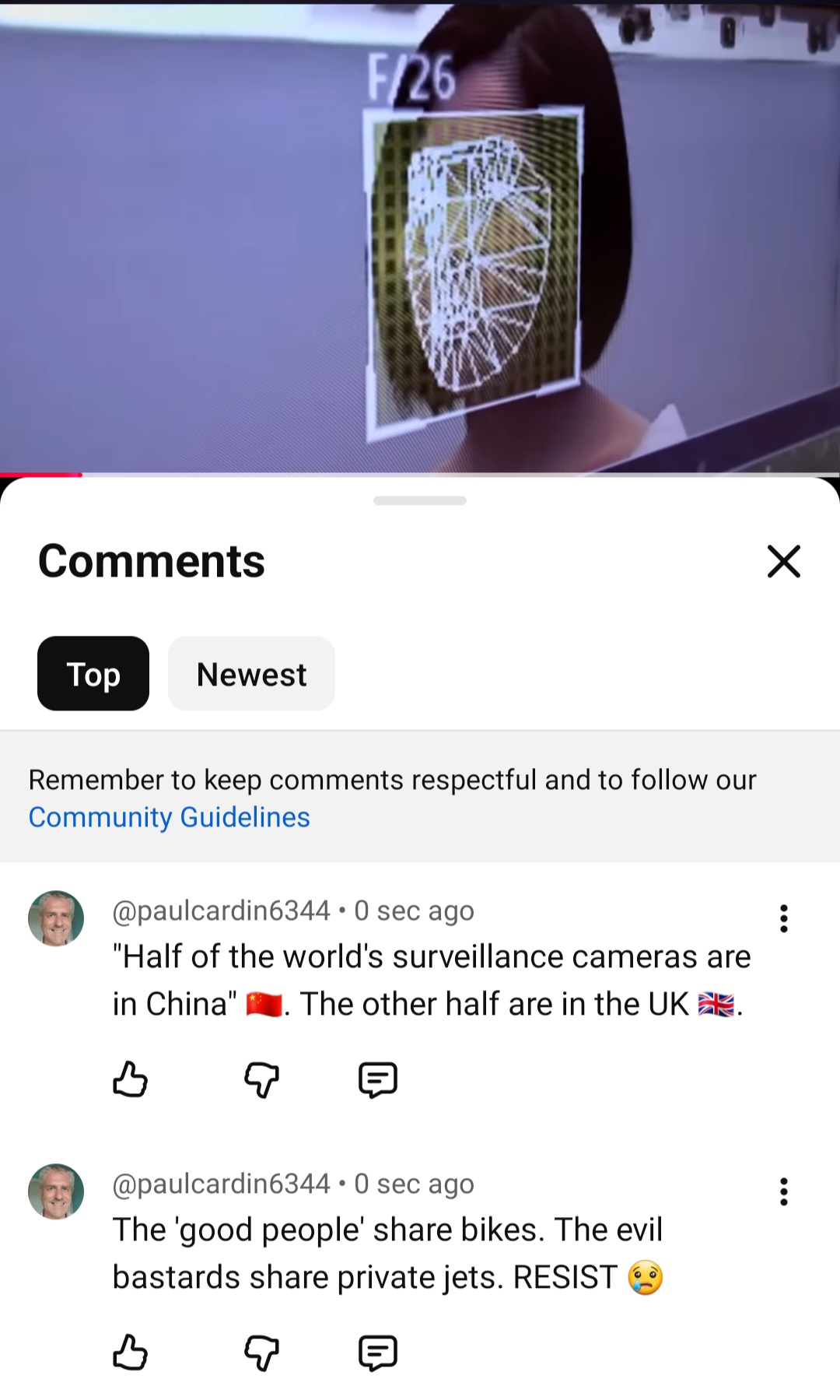
NBC goes inside the factories making facial recognition scanners that track the movements and communities experimenting with China’s social credit system
Posted in Uncategorized
Leave a comment
Windows 10 End of Life? Say NO to Windows 11…!
And AI is lying through its teeth to us…
Can I install Linux on a brand new laptop?
Yes, you can install Linux on a brand new laptop. You do not need to purchase a Windows license to download or install Linux, as the Windows license included with the laptop is for the operating system itself, not for accessing Linux. You can use another computer to download a Linux distribution’s ISO file and create a bootable USB drive using tools like Rufus, Balena Etcher, or Unetbootin. Once the USB is ready, you can boot from it on the new laptop by accessing the boot menu during startup (typically by pressing a key like F12, F9, or Delete) and selecting the USB drive.
Most popular Linux distributions come with drivers for common hardware, so you are unlikely to face significant issues with device compatibility, especially on non-bleeding-edge hardware. If needed, additional drivers or firmware can be installed after the system is set up. For a smoother experience, especially for beginners, distributions like Ubuntu, Linux Mint (Cinnamon), Zorin, or Pop!_OS are recommended due to their user-friendly interfaces and good hardware support. You can also try a distribution from a live USB without installing it first to test compatibility.
You have the option to install Linux alongside Windows (dual-boot) or replace Windows entirely. If you choose to replace Windows, ensure you back up any important data before partitioning the disk. Installing Linux on an external SSD is another option if you wish to avoid modifying the internal drive.
Return to Bomb Alley 1982 – The Falklands Deception, by Paul Cardin
Amazon link

http://paulcardin.substack.com
Posted in Uncategorized
Leave a comment
Return to Bomb Alley 1982 – The Falklands Deception. By Paul Cardin. Available on Ingram Spark
https://shop.ingramspark.com/b/084?params=DaD77JtGkv4NrZdrrqZBEdDIZsBZpZqLRk7LnW2zoW5
Return to Bomb Alley 1982 – The Falklands Deception, by Paul Cardin
Amazon link
http://paulcardin.substack.com
Posted in Uncategorized
Leave a comment
World’s first yen-pegged stablecoin debuts in Japan – Profit by Pakistan Today
Posted in Uncategorized
Leave a comment
Q. How deluded can one person be? A. THIS deluded … Combating Climate Disinformation: Three Hopeful Signs as We Head into COP30 – Union of Concerned Scientists
https://blog.ucs.org/kate-cell/combating-climate-disinformation-three-hopeful-signs-as-we-head-into-cop30/
Return to Bomb Alley 1982 – The Falklands Deception, by Paul Cardin
Amazon link
http://paulcardin.substack.com
Posted in Uncategorized
Leave a comment
The Dangers of Data Centres. Linked to Deeply Unpopular Digital ID #NoToDigitalID
https://x.com/PaulCardin79469/status/1981086899444789402
Return to Bomb Alley 1982 – The Falklands Deception, by Paul Cardin
Amazon link
http://paulcardin.substack.com
Posted in Uncategorized
Leave a comment
Paste this prompt into ChatGPT and get a complete business plan in 60 seconds …

Including 3-year financials.
This is what $5K consultants used to charge for.
The prompt:
- You are an expert business strategist and financial modeler. Given the following inputs:
- – Business name: {NAME}
- – Industry / product description: {DESCRIPTION}
- – Target customers: {TARGET_CUSTOMERS}
- – Key assumptions (growth rate, conversion, ARPU, costs): {ASSUMPTIONS}
- Produce a full investor-ready business plan with these sections:
- 1) Executive summary (one paragraph)
- 2) Company overview (mission, value prop, product)
- 3) Market analysis (TAM/SAM/SOM estimates, target customer personas, top competitors, trends/opportunities)
- 4) Business model & monetization (pricing, unit economics)
- 5) Go-to-market: marketing & sales strategy (channels, sample 90-day plan)
- 6) Financial projections: 3-year P&L, cash flow summary, and break-even analysis with clear assumptions and formulas (present numbers in table format)
- 7) Risk analysis and mitigation
- 8) Implementation timeline with milestones for 12 months (quarterly OKRs).
- Keep the plan concise and formatted with headings. If any input is missing, note the assumption you used.
- “`
- What it generates:
- Everything investors want to see:
- ✅ Executive summary
- ✅ Market analysis (TAM/SAM/SOM)
- ✅ Competitor landscape
- ✅ Unit economics
- ✅ 90-day GTM plan
- ✅ 3-year P&L with tables
- ✅ Cash flow projections
- ✅ Break-even analysis
- ✅ Risk mitigation
- ✅ 12-month implementation roadmap
- In under a minute.
- How to use it:
- Fill in the brackets:
- {NAME} = Your company name
- {DESCRIPTION} = “AI-powered accounting software for freelancers”
- {TARGET_CUSTOMERS} = “Freelancers earning $50K-$200K/year”
- {ASSUMPTIONS} = Your numbers
- Pro tip for assumptions:
- Paste a simple table after the prompt:
- “`
- Year 0 revenue: $0
- Monthly growth rate: 5%
- CAC: $100
- ARPU: $30/month
- Churn: 5%/month
- Operating costs: $10K/month
ChatGPT will use these to build realistic projections.
What makes this prompt powerful:
Most people ask ChatGPT: “Write me a business plan.”
And get generic garbage.
This prompt is structured like a consultant would think:
- Clear role assignment (“expert business strategist”)
- Specific inputs required
- Exact output format
- Financial modeling instructions
- Assumption handling
It forces rigor.
The financial projections are legit:
ChatGPT will:
- Calculate monthly recurring revenue
- Project customer acquisition
- Model churn impact
- Estimate cash burn
- Determine break-even month
With actual formulas shown.
You can verify the math.
Adjust the assumptions.
Re-run instantly.
Where this actually helps:
Fundraising prep: Get the structure right before hiring a consultant
Pitch deck support: Pull sections directly into slides
Internal planning: Align team on growth assumptions
Accelerator applications: Most want a basic plan
Reality check: See if your idea makes financial sense
Where it falls short:
It can’t:
- Validate your market research
- Know your actual competitors
- Predict real conversion rates
- Replace due diligence
It’s a starting point, not a finished product.
But it’s a REALLY good starting point.
The old way:
Hire consultant: $5K-$15K Wait time: 2-4 weeks Revisions: Painful Ownership: You paid but they “own” the model
The new way:
Paste prompt: Free Wait time: 60 seconds Revisions: Instant Ownership: 100% yours
Customizing for different business types:
SaaS: Add “focus on MRR, LTV:CAC ratio, and expansion revenue”
E-commerce: Add “include inventory costs, shipping margins, and return rates”
Marketplace: Add “two-sided growth dynamics and take rate optimization”
Services: Add “utilization rates and service delivery costs”
Just append to the prompt.
The iteration workflow:
- Run the prompt with initial assumptions
- Review the output
- Adjust assumptions based on reality
- Re-run in 30 seconds
- Repeat until numbers make sense
This is how you pressure-test your idea.
Real example outputs:
I tested this with:
“AI resume builder for job seekers”
It generated:
- TAM of $2.3B (validated against real data)
- Competitive analysis of 8 players
- Pricing strategy ($29-$99/month)
- Break-even at month 14 with assumptions shown
Took 45 seconds.
Why this matters now:
Investors are seeing 100+ decks per week.
The ones with clear financials get meetings.
The ones with “hockey stick projections” and no math get ignored.
This prompt forces you to:
- Think through unit economics
- Model realistic growth
- Identify risks early
- Show you’ve done the work
Even if AI helped.
The limitation nobody mentions:
ChatGPT will be optimistic.
It assumes:
- Conversion rates work
- Churn stays low
- Growth is consistent
- Competition doesn’t react
Real life is messier.
So multiply your timeline by 1.5x.
Cut your revenue projections by 30%.
That’s closer to reality.
The ethical question:
Should you tell investors AI generated this?
My take: No, because you’re not claiming AI did the thinking.
You:
- Provided the assumptions
- Validated the logic
- Own the strategy
AI just formatted it faster than Excel would.
That’s fine.
Where to go from here:
Use this prompt to:
- Draft your initial plan (60 seconds)
- Validate assumptions with real research
- Adjust numbers based on market data
- Share with advisors for feedback
- Refine before showing investors
It’s a tool, not a shortcut.
But it’s a REALLY good tool.
The future of business planning:
AI handles structure and math.
Humans handle strategy and validation.
The founders who win will use both.
The ones who think AI replaces thinking will fail.
Return to Bomb Alley 1982 – The Falklands Deception, by Paul Cardin
Amazon link
http://paulcardin.substack.com
Posted in Uncategorized
Tagged ai, artificial-intelligence, business, chatgpt, technology
Leave a comment


