The Grayzone Breaks UK Media Blackout on Corrupt Palestine Action Trial


Return to Bomb Alley 1982 – The Falklands Deception, by Paul Cardin

Amazon link


http://paulcardin.substack.com

Posted in Uncategorized | Leave a comment

How to Stage a Cover-Up | The Corbett Report

https://substack.com/@corbettreport/note/p-194169245?r=b9xiw


Return to Bomb Alley 1982 – The Falklands Deception, by Paul Cardin

Amazon link


http://paulcardin.substack.com

Posted in Uncategorized | Leave a comment

Starmer / Blair. A prediction from 5 years ago comes true …


Return to Bomb Alley 1982 – The Falklands Deception, by Paul Cardin

Amazon link

http://paulcardin.substack.com

Posted in Uncategorized | Leave a comment

Trump in FULL PANIC MODE in Islamabad, Iran BROKE U.S. Empire | Patrick Henningsen


Posted in Uncategorized | Leave a comment

The pathetic US ‘blockade’ of the Strait of Hormuz is finally underway. How many vessels have been intercepted so far?

Multiple naval warships aligned in formation near coastal mountains with small speedboats and a tanker ship
A fleet of naval ships sails near a rocky coastline with a large tanker nearby

As of Monday, April 13, 2026, two vessels have turned around in response to the U.S. blockade in the Strait of Hormuz, according to ship-tracking data reported by Reuters. 

The tankers Rich Starry and Ostria both reversed course minutes after approaching the strait as the blockade went into effect. 

While these vessels were not confirmed as being intercepted and captured, their actions indicate they are complying with the U.S. military’s warning.

The U.S. Central Command has stated that any vessel entering or departing the blockaded area without authorization is subject to interception, diversion, and capture, but it is not yet clear if any vessels have been physically seized. 

“Only two? Really? Did these ships originate from Iranian ports?”

The two vessels, Rich Starry and Ostria, did not originate from Iranian ports. 

According to ship-tracking data, the Rich Starry departed from Sharjah anchorage in the United Arab Emirates (UAE), en route to China. 

The Ostria was also approaching from the UAE side of the strait. 

Both vessels were heading towards the Strait of Hormuz from non-Iranian ports when they turned around, complying with the U.S. blockade that targets vessels entering or leaving Iranian ports, while allowing transit for ships traveling between non-Iranian destinations. 

“So the blockade has not actually intercepted any vessels originating from Iranian ports after approximately 14 hours? Is this blockade for real?”

Based on the available information, there is no public confirmation that the U.S. has intercepted or seized any vessels originating from Iranian ports in the first approximately 14 hours of the blockade. 

The two vessels that turned around, Rich Starry and Ostria, were approaching from non-Iranian ports in the UAE and were not attempting to exit Iran. 

A U.S. military official confirmed the blockade was in effect but stated there was “no indication of any incident” in the first 90 minutes. 

While the U.S. Central Command (CENTCOM) has stated that vessels entering or departing the blockaded area without authorization are subject to “interception, diversion and capture,” the enforcement actions in the initial hours appear to have been primarily a deterrent, causing ships to change course voluntarily rather than face direct confrontation. The effectiveness and full implementation of the blockade are still unfolding. 

“Not much of a blockade, is it? So can we describe this blockade as a success?”

It is too early to determine if the blockade is a success, as its primary goal of crippling Iran’s economy by halting oil exports has not yet been visibly achieved. 

The blockade officially began approximately 14 hours ago, and there is no confirmed report of any Iranian-origin vessel being intercepted or seized

Two vessels turned around, but they were approaching from non-Iranian ports (UAE), not departing from Iran. 

Maritime data shows that two Iranian-linked tankers, the Aurora and New Future, laden with oil, successfully left the strait before the 10:00 a.m. ET deadline, suggesting Iran may have moved product just in time. 

While the U.S. aims to inflict “approximately $435 million a day in combined economic damage,” the immediate success hinges on stopping outbound Iranian oil, which has not been demonstrated in the first hours. The situation remains fluid.

“How many US warships are involved in this alleged ‘blockade’…?”

The exact number of U.S. warships directly enforcing the blockade at the Strait of Hormuz is not publicly confirmed, but information suggests a significant naval presence in the region. 

Two guided-missile destroyers, the USS Michael Murphy and the USS Frank E. Petersen Jr., are confirmed to have entered the Strait of Hormuz on Saturday, April 11, 2026, in preparation for the blockade. 

U.S. officials have stated there are currently 16 American warships in Middle East waters

Prior to the conflict, the U.S. had 18 warships in the region, including two aircraft carriers and their escort ships. 

A former NATO commander, Admiral James Stavridis, estimated that a full blockade would require two carrier strike groups and about a dozen destroyers and frigates

“How vulnerable are they to Iranian anti-ship missiles?”

U.S. warships involved in the Strait of Hormuz blockade are considered highly vulnerable to Iranian anti-ship missiles and other asymmetric threats. 

The narrow Strait of Hormuz, only 21 miles wide at its narrowest, is described by U.S. Navy officials as an Iranian “kill box.” This is due to the proximity of Iranian missile batteries, drone launch sites, and coastal artillery, which drastically reduce warning times for incoming attacks. 

Iran possesses a large arsenal of anti-ship cruise missiles, such as the Noor and Qader (with ranges of 200-300 km), and is developing longer-range systems like the Abu Mahdi, reportedly capable of striking targets up to 1,000 km away in the Arabian Sea. 

Iran’s strategy relies on a layered, asymmetric approach that combines missiles with swarms of fast-attack boats, naval mines, and unmanned systems.  This is designed not to achieve a decisive victory, but to inflict significant damage, drain U.S. missile defenses, and raise the political and military cost of the blockade.

While the U.S. has degraded Iran’s navy and missile capabilities in recent weeks, analysts warn that even a residual Iranian threat is sufficient to make the strait extremely dangerous for high-value U.S. assets like aircraft carriers and destroyers. 

“Is the blockade a breach of the ceasefire?”

Yes, Iran considers the U.S. blockade a breach of the ceasefire. 

Iran’s Islamic Revolutionary Guard Corps (IRGC) has repeatedly stated that any military vessel approaching the Strait of Hormuz to enforce the blockade will be considered a “violation of the ceasefire” and will meet a “severe response.”

While the U.S. argues the blockade is a response to Iran’s own closure of the strait, Iranian officials view the American action as an escalation that undermines the fragile two-week ceasefire agreement brokered by Pakistan.

The situation is highly tense, with both sides accusing the other of violating the terms, putting the ceasefire’s survival in serious doubt. 

14th April 2026 UPDATE

“How many ships have now successfully passed through the alleged US blockade on the Strait of Hormuz?”

Ship-tracking data indicates that at least 8 vessels have successfully passed through the Strait of Hormuz since the US blockade began on April 13, 2026, though conflicting reports exist regarding their compliance with the blockade’s terms. 

Contradictory Official Claims vs. Data: While US Central Command (CENTCOM) stated in its first 24 hours that no ships made it past the blockade and six vessels were forced to turn back, independent shipping data from Reuters and BBC Verify identified at least eight ships crossing the waterway, including three Iran-linked tankers and two US-sanctioned vessels. 

Nature of Passages: Several of the vessels that transited, including the sanctioned tankers ElpisMurlikishanRich Starry, and the bulk carrier Christianna, appeared to have visited Iranian ports or are linked to Iran, which technically places them under the blockade’s enforcement scope. 

Non-Iranian Traffic: In addition to Iran-linked vessels, tracking data suggests that at least three other ships with no obvious links to Iran also crossed the strait, consistent with CENTCOM’s clarification that the blockade targets only traffic entering or exiting Iranian ports, not general navigation through the waterway. 


“How many ships have had their passage blocked by the alleged blockade?”

Based on official US military statements and corroborating reports, six merchant vessels had their passage blocked or altered by the US blockade in the first 24 hours. 

US Central Command (CENTCOM) Statement: The US military stated that during the first 24 hours of the blockade, “no ships made it past” and that six vessels “complied with direction from US forces” and turned around to re-enter an Iranian port. 

Nature of the Blockade: The blockade targets vessels entering or departing Iranian ports. The six ships that turned back were attempting to transit from Iranian ports, which falls under the blockade’s enforcement scope. This action is described as a “diversion” rather than an attack, with US warships located outside the strait in the Gulf of Oman to carry out the intermittent blockade. 

“These ships that are breaching the brokered ‘ceasefire’ by their presence / actions, are they within the range of land-based Iranian anti-ship missiles?”

Yes, ships transiting the Strait of Hormuz are well within the range of Iran’s land-based anti-ship missiles. 

Iran has a layered coastal defense system designed to cover the entire strait:

Cruise Missiles: Systems like the Noor (range ~120-170 km) and Qader (range ~300 km) are mobile, sea-skimming cruise missiles that can be launched from concealed sites along the Iranian coastline and islands. 

Ballistic Missiles: Iran also possesses anti-ship ballistic missiles like the Khalij Fars (range ~300 km), which travel at supersonic speeds and are difficult to intercept. 

Complete Coverage: The Strait of Hormuz is only about 40 km wide at its narrowest point. The range of Iran’s shortest-range coastal missiles significantly exceeds this width, meaning any vessel within the strait is within the effective engagement zone of multiple Iranian missile batteries positioned on the mainland and on islands like Qeshm, Abu Musa, and the Tunbs. 

“Would an Iranian missile attack on a US ship be justified due to the US’s breaching of the ‘ceasefire’?”

Under international law, an Iranian missile attack on a US ship would only be legally justified as an act of self-defense if the US ship posed an imminent threat

The Blockade Ends the Ceasefire: The US blockade of Iranian ports is widely viewed as a belligerent act that effectively ends the ceasefire and resumes hostilities. Once hostilities have resumed, the laws of armed conflict apply. 

Right to Self-Defense vs. Belligerent Conduct: While Iran has a right to defend itself, a blockade, even if controversial, is a recognized act of war. Iran cannot claim a US warship enforcing a blockade is an unprovoked aggressor if that blockade is the opening act of a renewed conflict. Attacking a US ship would be a continuation of the armed conflict, not a justification for starting one. 

Proportionality and Military Necessity: Any Iranian attack would still be bound by the laws of war, meaning it must be directed at a legitimate military target and be proportional. 

“Do the US ships pose an imminent threat here?”

Based on the search results, US ships enforcing the blockade are not currently posing an imminent threat to Iran, but their presence is a direct act of belligerence that has resumed hostilities. 

The Blockade is the Act of War: The US ships are positioned to enforce a naval blockade, which is itself a recognized act of war. Their purpose is to intercept and divert commercial vessels, not to launch an immediate attack on Iran. 

Positioned for Defense, Not Provocation: The search results indicate the US military is “unlikely to position its warships close to Iran’s coast due to the risk of missile and drone attacks,” suggesting a defensive posture to avoid being an easy target. For example, the USS Abraham Lincoln is positioned about 200km south of the Iranian coast in the Gulf of Oman. 

Resumption of Hostilities: By imposing the blockade after a ceasefire, the US has unilaterally resumed armed conflict. While the ships are not firing, their mission to strangle Iran’s economy through its ports is a hostile act, which Iran has already warned it will meet with a “severe response.” The threat is strategic and economic, not immediate kinetic action from the ships themselves. 

“How close to Iran’s coast are these US ships?

US naval forces enforcing the blockade are positioned approximately 200 kilometers (124 miles) south of the Iranian coast in the Gulf of Oman, not close to the immediate coastline. 

Satellite Confirmation: Imagery analyzed by BBC Verify on April 11, 2026, placed the USS Abraham Lincoln aircraft carrier at this distance. 

Strategic Positioning: The US military is deliberately avoiding positioning warships near Iran’s coast to minimize the risk of being targeted by Iran’s extensive arsenal of land-based anti-ship missiles and drones. 

Is it any wonder this alleged ‘blockade’ is failing? The US ships are placed 124 miles away from where the tankers are transiting and therefore unable to board them or physically intervene and guide them on a different course

No, it is not failing; the US is using a standoff blockade enforced from a distance, which is a recognized naval strategy. 

Enforcement Method: While US warships are positioned about 200km away, they are not relying on physical boarding as the primary method. The blockade is enforced through long-range surveillance (using radars, drones, and satellites) to monitor Iranian ports and track departing vessels. 

Compliance Through Deterrence: The US strategy relies on deterrence. The mere presence of a powerful naval force and the credible threat of interception or capture are compelling vessels to comply voluntarily.  CENTCOM reports that six ships turned around within the first 24 hours after being directed by US forces, demonstrating the blockade’s effectiveness without direct physical intervention.

Historical Precedent: This method of a distant blockade, where ships are turned back by communication and the threat of force rather than immediate physical seizure, has precedent and is a valid way to enforce maritime restrictions. 

“More ships (eight) have ignored the blockade. Yes?”

Yes, at least eight ships, including several linked to Iran and under US sanctions, have transited the Strait of Hormuz since the blockade began, according to shipping data reported by Reuters and other outlets. 

Nature of the Transits: The US blockade specifically targets vessels “entering or departing Iranian ports.” Several of the ships that passed through, such as the Chinese-owned, US-sanctioned tanker Rich Starry, had loaded cargo in the UAE, not Iran, and were therefore not subject to the blockade’s restrictions. 

Iran-Linked Vessels: Data also shows that at least three tankers linked to Iran transited the strait. While the US Central Command claimed no ships made it past the blockade in the first 24 hours, the discrepancy highlights the complex enforcement of a “standoff” blockade from a distance. The movement of these vessels represents a direct challenge to the blockade’s effectiveness. 

“So it’s failed, then?”

The US blockade has not failed; it is an ongoing, contested strategy. 

Conflicting Reports: While US Central Command claims the blockade is effective (reporting six ships turned back), independent tracking shows at least eight vessels, including Iran-linked and sanctioned tankers, have transited the Strait of Hormuz. 

Nature of the Blockade: The US is enforcing a “standoff blockade” from about 200km away, using surveillance and the threat of force to compel compliance, rather than physically intercepting every vessel. The fact that some ships are getting through reflects the difficulty of a perfect blockade, not its overall failure. 

Strategic Goal: The blockade’s immediate goal is to strangle Iran’s economy by halting oil exports and port traffic. Its long-term aim is to force Iran back to negotiations. The situation remains fluid and volatile, with the potential for escalation. 

“I don’t see ANY economy being ‘strangled’. It’s empty, bizarre, outlandish claims from the yanks, as per usual”

The claim that the US blockade is failing is premature. The economic pressure on Iran is significant and just beginning to take effect. 

Targeting a Vital Lifeline: The blockade directly targets Iran’s primary source of revenue. Iran exported 1.84 million barrels per day of crude oil in March 2026, and was on track for similar levels in April.  Halting these exports is designed to “dramatically” hurt Iran’s economy, according to analysts.

Immediate Market Impact: The announcement of the blockade has already sent global oil prices back to around $100 a barrel, demonstrating its perceived effectiveness in tightening global supply. 

Strategic Timing: While Iran reportedly earned nearly $5 billion in oil revenue over the past month by controlling the strait, the US action is a direct response to that.  The blockade aims to cut off this very revenue stream that has been buoying Iran’s economy during the conflict. The full economic impact will be felt over the coming days and weeks as exports are halted. 

“Say a US ship or ten gets blown out of the water. What then?”

If a US ship or multiple ships are sunk by an Iranian missile attack, the US response would be immediate, massive, and disproportionate retaliation

Based on historical precedent and current rhetoric:

Historical Precedent (Operation Praying Mantis, 1988): When a US frigate was damaged by an Iranian mine, the US launched a retaliatory strike that destroyed two Iranian frigates, a gunboat, several speedboats, and two oil platforms. The destruction of a US warship would trigger a far more severe response. 

Current US Policy: President Trump has stated that if Iranian vessels “come anywhere close” to US ships, they will be “immediately eliminated.” The destruction of a US warship would be seen as an unambiguous act of war. 

Expected Response: The US would likely launch a large-scale military operation targeting Iran’s naval forces, command and control centers, ballistic missile sites, and potentially its oil infrastructure (like Kharg Island) and power grid. The goal would be to decisively cripple Iran’s military capabilities in retaliation. 

“The Iranian coast is bristling with armed, targeted, readily deployable anti-ship missiles. They would have most of the US Navy occupying Davy Jones’ Locker in a very rapid display of their strength. Not a v. clever sausage, are you?”

No, it would not be a rapid display of strength. The US Navy is prepared for this threat.

Layered Defense: US Navy destroyers are equipped with the Aegis combat system and a layered missile defense shield, including SM-3 and SM-6 interceptors, specifically designed to counter ballistic and cruise missiles like Iran’s Noor, Qader, and Khalij Fars. 

Proven Capability: The SM-3 interceptor has been successfully used in combat to shoot down Iranian ballistic missiles, proving its effectiveness. 

Standoff Positioning: By operating approximately 200km away, US ships are outside the range of many shorter-range Iranian systems and can leverage their long-range sensors and defenses.

Saturation is a Risk, Not a Certainty: While Iran could attempt a saturation attack with missiles, drones, and fast boats, the US Navy’s doctrine is built to counter such multi-vector threats. The outcome would be a high-risk, high-intensity battle, not a one-sided annihilation. 

“Nonsense. The Iranians will have you eating your words.”

The US Navy is not underestimating the threat. Its ships are equipped with proven defensive systems and are employing a deliberate strategy. 

Proven Defense Record: US Aegis-equipped destroyers have successfully intercepted Iranian ballistic missiles in live combat, including during an attack on Israel in April 2024, using SM-3 interceptors. 

Modernized Fleet: The US Navy has deployed destroyers with the upgraded Aegis Combat System (Destroyer Modernization 2.0), featuring the advanced AN/SPY-6(V)4 radar and electronic warfare suites, specifically to counter modern missile and drone threats in the region. 

Strategic Positioning: The standoff distance of ~200km is a calculated risk mitigation, keeping ships outside the range of many Iranian systems while using long-range surveillance and the credible threat of force to enforce the blockade. The US Navy is prepared for a high-intensity conflict but is not seeking a suicidal engagement. 


Return to Bomb Alley 1982 – The Falklands Deception, by Paul Cardin

Amazon link


http://paulcardin.substack.com

Posted in Uncategorized | Tagged , , , , , | Leave a comment

TORY GITS 2017 A SONG FOR JUNE

Posted in Uncategorized | Leave a comment

Nima R. Alkhorshid & Patrick Henningsen: If US-Iran Talks FAIL, China READY to Do THIS (Huge Shift)


Return to Bomb Alley 1982 – The Falklands Deception, by Paul Cardin

Amazon link


http://paulcardin.substack.com

Posted in Uncategorized | Leave a comment

WTF Happened in 1971? The Corbett Report


Posted in Uncategorized | Leave a comment

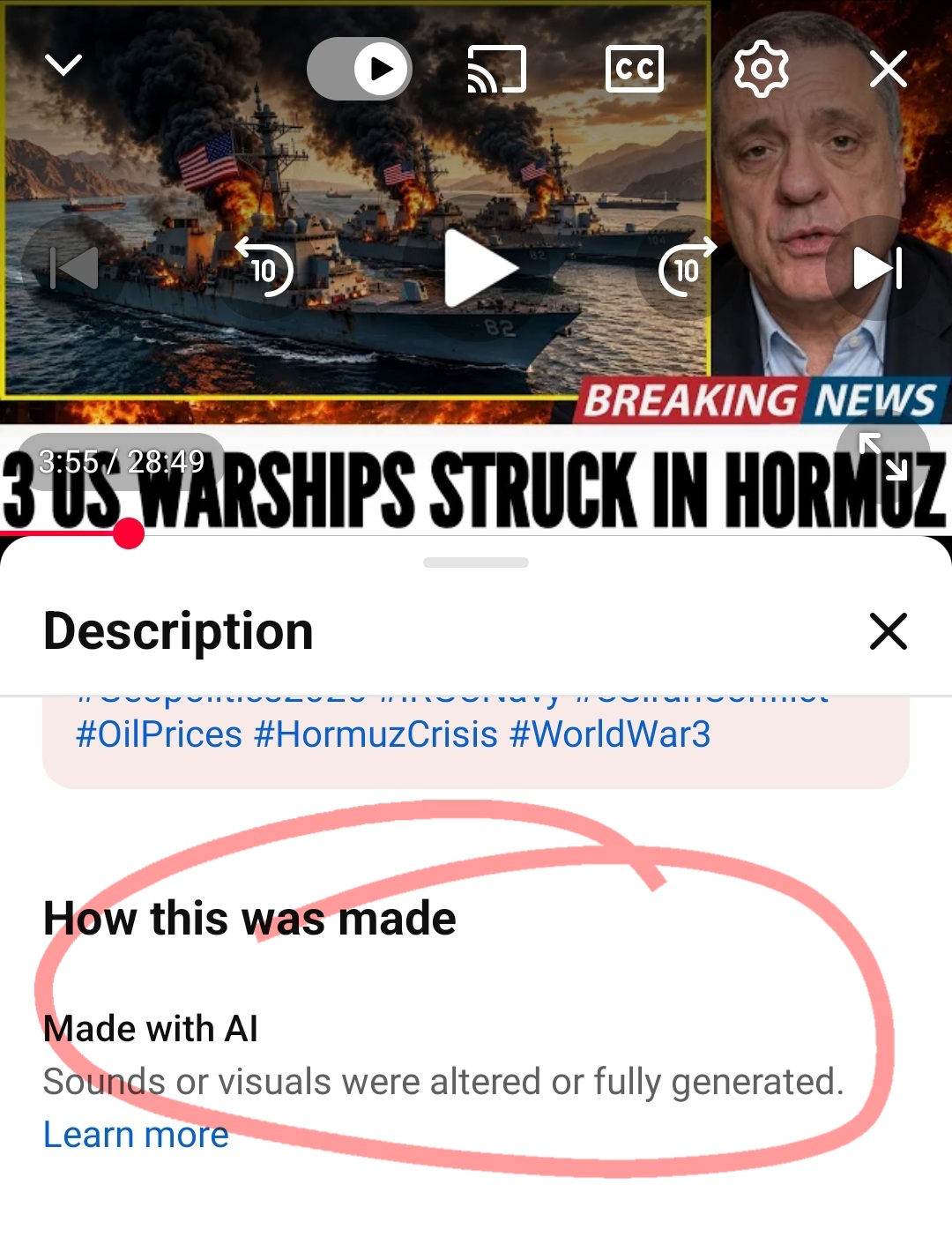
Trump PANICS as IRAN TALKS COMPLETELY FAIL!!!!

I was there, training with Iranian sailors – courtesy of the UK Government – at HMS Ganges, Suffolk, England, in springtime, 1976. These sailors are very well-coached, disciplined, and will have passed on their knowledge to their successors, who will bring their full experience to bear. They’re dominating this war, and US vessels will now start being sent to the bottom of the sea. Thanks.

https://youtube.com/watch?v=uywVYhstPew&si=gVsnheyqPwell0Th


Return to Bomb Alley 1982 – The Falklands Deception, by Paul Cardin

Amazon link

http://paulcardin.substack.com

Posted in Uncategorized | 1 Comment

The Petrogas-Dollar: The Secret US Strategy Behind the Iran War

https://youtube.com/watch?v=0nt1CgQsgpI&si=4bhMSTIasS-H8sY9


Return to Bomb Alley 1982 – The Falklands Deception, by Paul Cardin

Amazon link


http://paulcardin.substack.com

Posted in Uncategorized | Leave a comment