
-
Recent Posts
- Bogus Iran Ceasefire | Max Blumenthal
- The Multipolar World Order IS the New World Order | The Corbett Report
- Dear Brave Browser AI Chatbot, please tell me about Wirral criminal entrepreneur Asif Hamid
- Why are the Wirral local media currently ignoring the crimes of Wirral entrepreneur Asif Hamid?
- Criminal Fraudster and Conman Asif Hamid issued strings of weasel words to the local media on ‘track and trace’, aimed at ‘helping’ the Wirral public’s health / wellbeing during COVID
Categories
- #Brickgate
- 5G
- 5G alleged fraud
- Alleged Planning Crimes
- Angela Eagle
- BIG Fund Scandal
- Big Pharma Control / Deception
- censorship
- Cheshire West FoI ban
- COVID-19
- Criminal Asif Hamid
- Discretionary Housing Payments
- Election 2023
- Fake 'vaccines'
- FoI Requests
- Frank Field
- General
- Human Rights
- Labour Party Upheaval
- Press Freedom / Assange
- SARS-COV-2
- SOLAR
- Solar Farms
- The Duran eBooks
- Uncategorized
- Vote Rigging
- Whistleblowing
- Wirral Council Scandal
- Workplace trouble
Archives
- April 2026
- March 2026
- February 2026
- January 2026
- December 2025
- November 2025
- October 2025
- September 2025
- August 2025
- July 2025
- June 2025
- May 2025
- April 2025
- March 2025
- February 2025
- January 2025
- December 2024
- November 2024
- October 2024
- September 2024
- August 2024
- July 2024
- June 2024
- May 2024
- April 2024
- March 2024
- February 2024
- January 2024
- December 2023
- November 2023
- October 2023
- September 2023
- August 2023
- July 2023
- June 2023
- May 2023
- April 2023
- March 2023
- February 2023
- January 2023
- December 2022
- November 2022
- October 2022
- September 2022
- August 2022
- July 2022
- June 2022
- May 2022
- April 2022
- March 2022
- February 2022
- January 2022
- December 2021
- November 2021
- October 2021
- September 2021
- August 2021
- July 2021
- June 2021
- May 2021
- April 2021
- March 2021
- February 2021
- January 2021
- December 2020
- November 2020
- October 2020
- September 2020
- August 2020
- July 2020
- June 2020
- May 2020
- April 2020
- March 2020
- February 2020
- January 2020
- December 2019
- November 2019
- October 2019
- September 2019
- August 2019
- July 2019
- June 2019
- May 2019
- April 2019
- March 2019
- February 2019
- January 2019
- December 2018
- November 2018
- October 2018
- September 2018
- August 2018
- July 2018
- June 2018
- May 2018
- April 2018
- March 2018
- February 2018
- January 2018
- December 2017
- November 2017
- October 2017
- September 2017
- August 2017
- July 2017
- June 2017
- May 2017
- April 2017
- March 2017
- February 2017
- January 2017
- December 2016
- November 2016
- October 2016
- September 2016
- August 2016
- July 2016
- June 2016
- May 2016
- April 2016
- March 2016
- February 2016
- January 2016
- December 2015
- November 2015
- October 2015
- September 2015
- August 2015
- July 2015
- June 2015
- May 2015
- April 2015
- March 2015
- February 2015
- January 2015
- December 2014
- November 2014
- October 2014
- September 2014
- August 2014
- July 2014
- June 2014
- May 2014
- April 2014
- March 2014
- February 2014
- January 2014
- December 2013
- November 2013
- October 2013
- September 2013
- August 2013
- July 2013
- June 2013
- May 2013
- April 2013
- March 2013
- February 2013
- January 2013
- December 2012
- November 2012
- October 2012
- September 2012
- August 2012
- July 2012
- May 2012
- February 2012
- November 2011
- September 2011
- August 2011
Meta
My Global Hits


Return to Bomb Alley 1982 – The Falklands Deception
From Paul Cardin, a Falklands Conflict veteran. This is a biting commentary, told from the heart. Also included is a 1982 diary, written on location. This book forms a forensic inquiry into several conflict-related mysteries that have never been addressed or resolved - even after 40 years.
£12.99
Dransfield V NFUM
Email: alanmdransfield@gmail.com
Date: 3 January 2026
References: A/C10002316 and A/C20002316
To: Court Manager / Legal Adviser (Clerk to the Justices), Lincoln Magistrates’ Court (HMCTS)
Subject: Urgent request – authentication of 7-page ‘Decision Notice’ and disclosure of hearing record, notes and audio/transcript
Dear Court Manager / Legal Adviser,
I write in relation to my private prosecution application (application for summons and/or warrant). I hold a 7-page document described as a ‘Decision Notice/record’ which appears to relate to the determination of my application. However, the document provided to me is not signed, not dated and not sealed/stamped, and it contains no reliable information enabling me to identify the date of determination or whether any hearing took place. This prevents effective review and undermines confidence in the integrity of the court record.
1) Authentication and status of the 7-page ‘Decision Notice’
1. Please confirm whether the 7-page document was formally issued/served as the court’s decision.
2. If it was issued/served as the court’s decision, please provide the authenticated version bearing the name of the judicial officer, signature (or authorised authentication), and date of decision, and the court stamp/seal where applicable.
3. If no authenticated/signed/dated version exists, please confirm explicitly that no signed/dated decision record exists on the court file, and explain why an unauthenticated document was supplied.
2) Was there a hearing (and if so, when)?
I cannot recall attending any hearing because the paperwork provided contains no date and no reliable identifying information. Please confirm whether my application was determined without a hearing (on the papers) or at a hearing.
1. If there was a hearing: the date, time, courtroom, and who was present (judicial officer, legal adviser/clerk, and any parties/representatives).
2. Please provide a copy of the listing record / cause list entry / case management entry that records the hearing or determination date.
3) Notes, record of decision, and clerk/legal adviser attendance
1. Provide copies of the judge’s notes and/or any typed reasons retained on the file.
2. Provide copies of the legal adviser/clerk notes (or any ‘record of decision’ sheet retained on file).
3. Confirm whether a legal adviser/clerk was present and whether a Digital Audio Recording was made.
4. If no notes exist, please confirm who made that determination and why.
4) Audio recording and transcript
1. Confirm whether any hearing/determination was audio recorded.
2. If it was recorded: provide the recording reference and the process for obtaining the audio and/or an approved transcript.
3. If there is no recording: confirm this in writing.
5) Judicial officer identified on the file
Please confirm the name of the judicial officer said to have made the decision (I understand this may be District Judge (Magistrates’ Courts) Amar Mehta), and whether the decision was made at a hearing or on the papers.
6) Urgency
Please treat this as an urgent request and respond within 7 days. If you consider any part of this request should be directed elsewhere within HMCTS, please confirm precisely where it has been forwarded and provide the correct contact details.
Yours faithfully,
Alan M Dransfield
Sincerely,
Alan M Dransfield
Return to Bomb Alley 1982 – The Falklands Deception, by Paul Cardin
Amazon link

http://paulcardin.substack.com
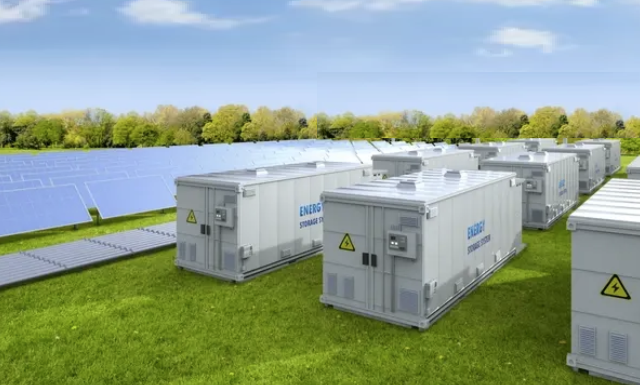
Is it likely that the proposed Chint solar ‘farm’ in Thurstaston, Wirral will have no battery energy storage system?
12th February UPDATE
REPRESENTATIVES OF CHINT GROUP HAVE STATED THAT A LAND DEAL HAS BEEN STRUCK AND THAT BATTERY ENERGY STORAGE SYSTEMS WILL NOT BE USED AT THE THURSTASTON SOLAR COMPLEX
5th January 2026 UPDATE
Scoping and screening requests for proposed solar PV development:
I’ve read through all 116 pages of the Chint Solar ‘Request for EIA Screening Opinion’ that’s been submitted to Wirral Council and unusually, there is no specific mention of a battery energy storage system (BESS) component within the design. The Chint Solar ‘Request for EIA Screening Opinion’ is comprehensive and covers lots of areas, but this apparent omission is a little concerning. Admittedly, there are three vague references to ‘associated infrastructure’, but if a BESS is planned (with the associated fire / toxic fumes risk), it really ought to have been specified – and in close detail.
The above headline question was put to the Brave Browser AI chatbot. I don’t place much trust in AI systems because they’re prone to error, but it’s always interesting to see how they respond:
“As of January 3, 2026, the proposed Chint Solar farm in Thurstaston, Wirral, is currently under review by Wirral Council, and there is no definitive information confirming whether a battery energy storage system (BESS) will be included in the final development. The application submitted by Chint Solar focuses on a 27-hectare solar farm on green belt land, with the company emphasizing its contribution to the UK’s Net Zero targets and energy security. However, the documents do not explicitly state the inclusion or exclusion of a BESS, and no official decision has been made on the project’s scope.
The application highlights the solar farm’s potential to contribute significantly to renewable energy generation and carbon reduction, but it does not specify whether a battery storage system will be co-located.
While BESS systems are commonly integrated with large-scale solar projects to enhance grid stability and energy availability, the current application does not confirm such a component for the Thurstaston site.
Concerns have been raised by local authorities and residents about the environmental and landscape impact of the solar farm, particularly due to its proximity to the Dee estuary and listed buildings, but these concerns do not address the presence or absence of a BESS.
As of now, the proposal remains in the planning phase, and the inclusion of a BESS is not confirmed in the publicly available documentation.
Therefore, it’s currently uncertain whether the proposed Chint Solar farm in Thurstaston will include a battery energy storage system.”
WIIT: ‘What are the advantages or disadvantages of not incorporating a battery energy storage system within the final design if it is indeed constructed?’
“Advantages of Not Including a Battery Energy Storage System (BESS)
Not incorporating a BESS in the Chint Solar farm design could reduce upfront capital costs and system complexity, making the project more financially viable in the short term. It would also eliminate concerns related to battery safety risks, such as thermal runaway or fire hazards, and reduce environmental impacts associated with battery manufacturing and disposal.
Lower installation and maintenance expenses.
Simplified permitting and grid connection processes.
Avoidance of battery degradation and replacement costs over the system’s 25–30 year lifespan.
Solar farm without battery storage economic benefits
Disadvantages of Not Including a BESS
Without a BESS, the solar farm would only generate electricity during daylight hours, limiting its ability to supply power during peak demand periods in the evening or during grid outages. This reduces grid stability and energy reliability, especially during periods of solar intermittency or unbalanced loads.
Increased harmonic distortion (THD up to 6.27%) and reduced power quality compared to systems with BESS (THD as low as 3.27%)
Inability to perform load shifting or time-of-use optimization, missing opportunities to stabilize the grid and maximize revenue
Lower contribution to voltage regulation and frequency control, which are critical for modern grid resilience
Studies show that integrating BESS with solar farms significantly improves power quality and grid integration, especially under variable weather and load conditions.”
In light of this, if I was a Wirral councillor or senior officer evaluating this scheme, I would be asking some very searching questions of the applicant.
I am a qualified electrical engineer. I once worked for Manweb – the old pre-privatisation electricity board – and later for two different councils.
Whilst definitely not an ‘expert’ in this field, I would say that within this proposed solar construction, the operational advantages of including a battery energy storage system definitely OUTWEIGH the disadvantages.
Is it necessary to include battery energy storage systems as part of a solar or wind ‘farm’? No, it’s not necessary. However, it only makes good sense to do so, since the sun doesn’t always shine, and the wind doesn’t always blow; yet we require the electricity to always be available and waiting for us when we need it…!
Before anybody gets the wrong impression, I – and many of my friends – remain opposed to solar ‘farms’ and wind turbines in principle, and not simply due to where they might be located. They should not be located anywhere!
Which sets us apart from those NIMBY types who selectively don’t want them in Thurstaston, Hoylake or West Kirby, but are fine and dandy if they’re allowed to carpet large areas of Seacombe or Birkenhead.
PLEASE SIGN THE NO TO INDUSTRIAL SOLAR FARMS PETITION HERE:
https://www.change.org/p/say-no-to-industrial-solar-farms-on-wirral-s-green-belt
Return to Bomb Alley 1982 – The Falklands Deception, by Paul Cardin
Amazon link
http://paulcardin.substack.com
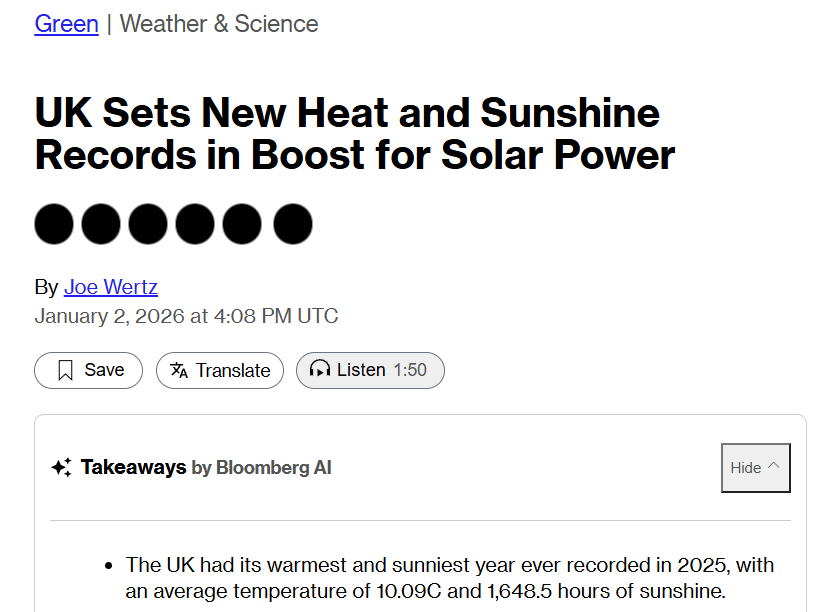
UK set new annual heat and sunshine records last year (2025) in boost for solar power (Bloomberg PAYWALL REMOVED …)
https://archive.md/6dcMj

Return to Bomb Alley 1982 – The Falklands Deception, by Paul Cardin
Amazon link
http://paulcardin.substack.com
Posted in Uncategorized
Leave a comment
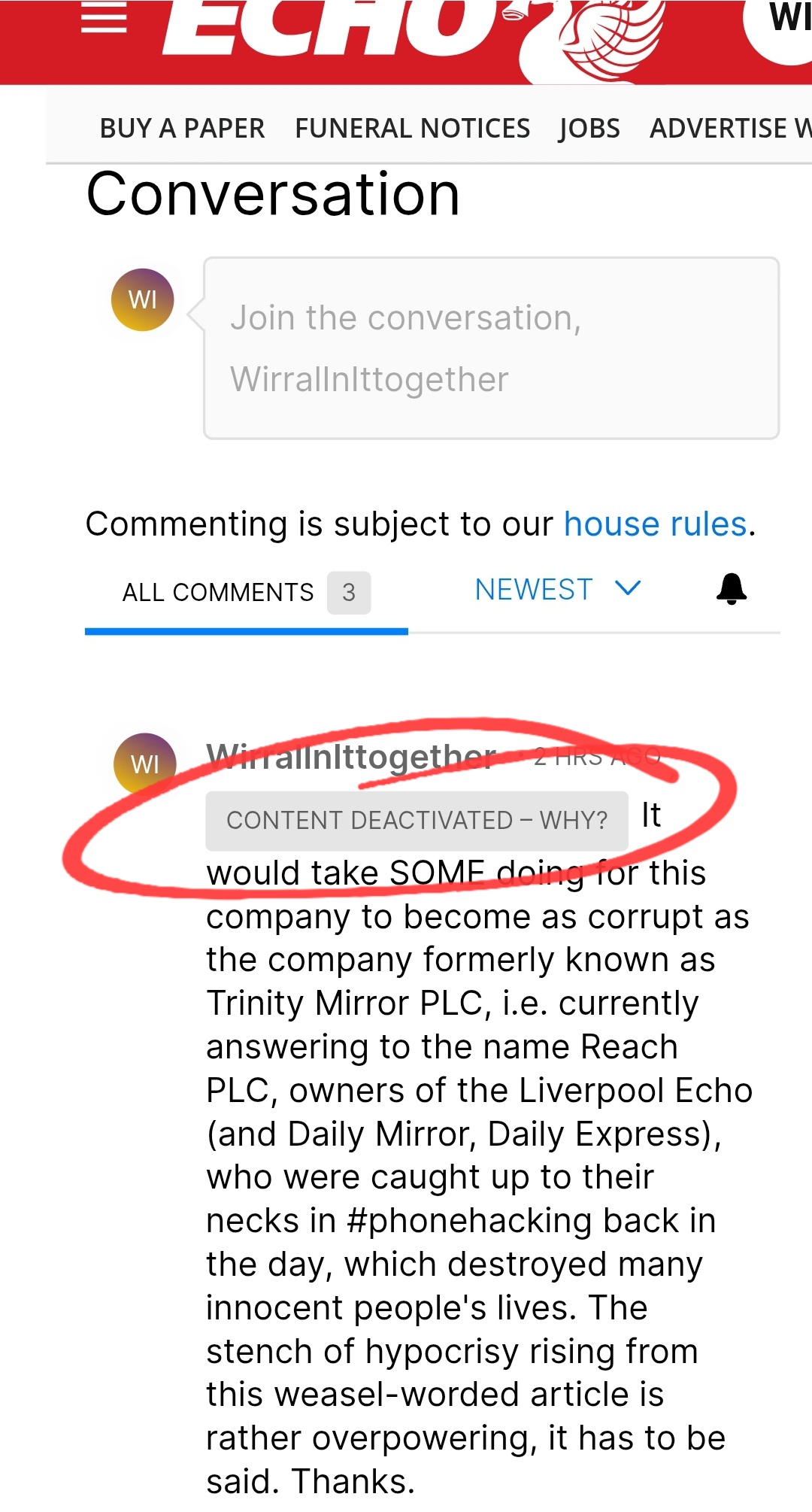
Liverpool Echo hypocrisy and hubris… WRIT LARGE … “Dramatic downfall of hotel and wedding venue company revealed as possession of historic building ordered”
https://www.liverpoolecho.co.uk/news/liverpool-news/dramatic-downfall-hotel-wedding-venue-33148320
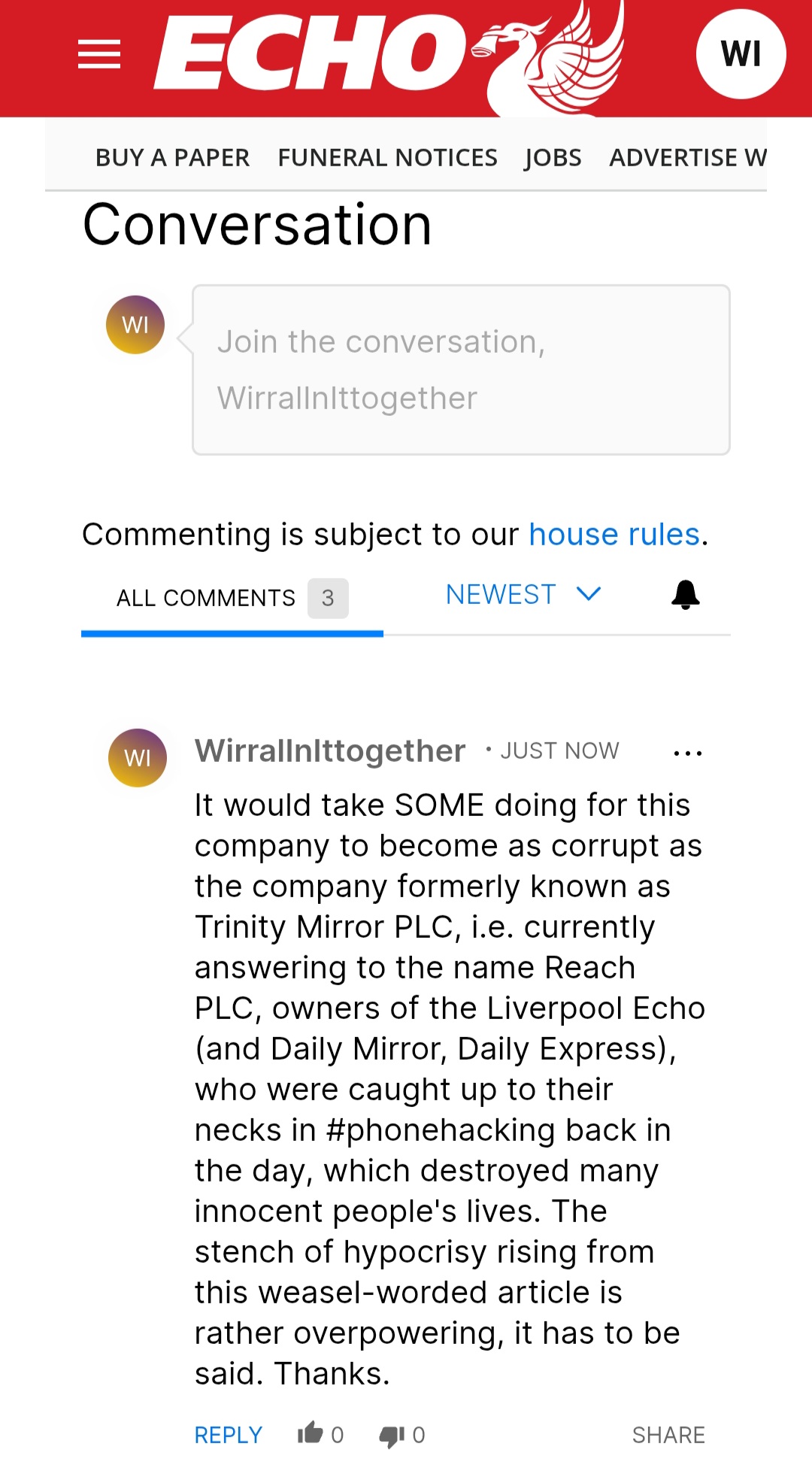
And look what the obedient fools at Reach PLC did to my factual comment … cancelled it, deleted it, obliterated it…! 😁
Return to Bomb Alley 1982 – The Falklands Deception, by Paul Cardin
Amazon link
http://paulcardin.substack.com
Posted in Uncategorized
Leave a comment
UK Government ‘withholding data that may link Covid jab to excess deaths’
Posted in Uncategorized
Leave a comment
#CBDC – Central Bank Digital Currencies – Links to recent news stories. January 2026

https://www.dlnews.com/articles/markets/chinese-investors-bet-188m-on-cbdc/
https://www.bitget.com/news/detail/12560605128259
https://beincrypto.com/china-china-digital-yuan-pay-interest/
https://www.tradingview.com/news/cointelegraph:be9cae14c094b:0-cash-like-privacy-is-among-digital-euro-s-hardest-political-tradeoffs/
https://coingeek.com/south-korea-revives-cbdc-program-for-government-subsidies/
https://www.ledgerinsights.com/digital-yuan-morphs-from-cbdc-into-digital-bank-deposits-to-rival-stablecoins/
https://www.dlnews.com/articles/markets/russia-cbdc-launch-will-seriously-undermine-its-mir-cards/
https://www.ukfinance.org.uk/news-and-insight/blog/global-cbdc-developments-in-2025-emerging-trends-and-geostrategic
https://www.centralbanking.com/fintech/cbdc/7974768/academics-call-on-european-parliament-to-back-digital-euro
https://www.cbn.com.cy/article/124921/the-case-for-the-digital-euro
https://www.centralbanking.com/central-banks/currency/digital-currencies/7974822/chinas-interest-bearing-cbdc-a-world-first-experts-say
https://www.coindesk.com/markets/2026/01/19/india-s-central-bank-proposes-a-plan-to-create-digital-currency-link-among-brics-nations
https://www.india.com/news/why-chinas-interest-bearing-cbdc-changes-global-playbook-8274854/
https://www.kucoin.com/restrict?code=PAGE_COMPLIANCE
https://www.thehindubusinessline.com/data-stories/data-focus/brics-reality-china-followed-by-india-dominate-cbdc-race/article70529622.ece
https://crypto.news/tokenization-boom-pits-bitcoin-standard-vs-cbdc-guardrails-at-the-world-economic-forum/
https://www.crowdfundinsider.com/2026/01/257614-governor-of-florida-criticizes-eu-ambition-to-issue-a-cbdc-or-digital-euro/
https://cepr.org/voxeu/columns/central-bank-digital-currency-and-monetary-sovereignty
https://www.dlnews.com/articles/markets/digital-ruble-used-for-first-time-in-russian-govt-contract/
https://cryptorank.io/news/feed/46317-digital-ruble-moscow-subway-payments
https://www.msn.com/en-us/money/markets/eu-sanctions-take-aim-at-russia-s-cbdc-and-crypto-service-providers/ar-AA1VRKik?ocid=finance-verthp-feeds
https://finance.yahoo.com/news/ray-dalio-warns-cbdcs-could-232121205.html
https://www.thestreet.com/crypto/markets/billionaire-ray-dalio-has-blunt-message-on-financial-privacy
https://www.piie.com/blogs/realtime-economics/2026/china-gives-state-backed-digital-cash-us-and-europe-should-take-note
https://coinfomania.com/ray-dalio-warns-cbdcs-threaten-financial-privacy/
https://www.cryptopolitan.com/bundesbank-pushes-euro-cbdc/
https://www.centralbanking.com/benchmarking/fintech/7975083/cbdcs-politicised-in-one-in-five-of-jurisdictions
https://www.hokanews.com/2026/02/ray-dalio-sounds-alarm-on-cbdcs-warning.html
https://news.bit2me.com/en/the-fed-prepares-for-a-digital-dollar-cbdc/
https://www.zeebiz.com/economy-infra/news-rbi-press-conference-february-23-2026-key-takeaways-sanjay-malhotra-nirmala-sitharaman-announcements-390885
https://www.centralbanking.com/benchmarking/fintech/7975242/two-thirds-of-central-banks-predict-cbdc-adoption-in-5-10-years
https://www.centralbanking.com/benchmarking/fintech/7975242/two-thirds-of-central-banks-predict-cbdc-adoption-in-5-10-years
https://www.centralbanking.com/benchmarking/fintech/7975242/two-thirds-of-central-banks-predict-cbdc-adoption-in-5-10-years
https://www.ledgerinsights.com/bank-of-japan-starts-exploring-wholesale-cbdc/
https://news.bitcoin.com/rwanda-unveils-yearlong-cbdc-pilot-program/
https://www.tradingview.com/news/cointelegraph:05f296457094b:0-senate-housing-bill-amendment-proposes-to-block-us-cbdc-until-2030/
https://cepr.org/voxeu/columns/central-bank-digital-currency-future-money-and-politics
https://www.msn.com/en-us/money/markets/the-cbdc-debate-what-digital-dollars-could-mean-for-senior-privacy/ar-AA1XJ1vk?ocid=finance-verthp-feeds
https://cryptoadventure.com/senate-housing-bill-amendment-proposes-to-block-us-cbdc-until-2031/
https://cepr.org/voxeu/columns/central-bank-digital-currency-future-money-and-politics
https://www.msn.com/en-us/money/markets/the-cbdc-debate-what-digital-dollars-could-mean-for-senior-privacy/ar-AA1XJ1vk?ocid=finance-verthp-feeds
https://cryptoadventure.com/senate-housing-bill-amendment-proposes-to-block-us-cbdc-until-2031/
https://www.bitget.com/news/detail/12560605267919
https://www.scmp.com/news/us/article/3347221/us-china-split-digital-money-deepens-stablecoin-debate-stalls-clarity-act
https://thecurrencyanalytics.com/finance/gd-executive-warns-cbdc-rollout-faces-major-roadblocks-248048
https://www.msn.com/en-us/money/markets/germanys-central-bank-president-touts-stablecoin-and-cbdc-benefits-for-eu/ar-AA1WtVgE
https://www.caixinglobal.com/2026-03-20/exclusive-china-expands-digital-yuan-network-with-12-new-banks-102424839.html
https://www.norges-bank.no/en/news-events/news/News-items/2026/26-03-23-cbdc/
https://www.dlnews.com/articles/markets/tokenisation-needs-these-three-things-to-explode-in-the-eu/
https://www.tradingview.com/news/moneycontrol:0eba418a0094b:0-rbi-explores-cbdc-ties-with-4-5-nations-to-boost-cross-border-payments-report/
https://gatewayhouse.in/brics-cbdcs-can-lead-to-financial-multipolarity/
https://cryptonews.net/news/legal/32610725/
https://www.ledgerinsights.com/with-eu-wholesale-cbdc-settlement-approaching-the-focus-shifts-to-use-cases/
https://www.mexc.com/news/981976
https://techbullion.com/central-bank-digital-currencies-are-now-live-in-11-countries-a-progress-report/
https://www.policycircle.org/economy/india-cbdc-digital-rupee-rbi/
https://www.tekedia.com/jerome-powell-notes-that-federal-reserve-has-no-plans-for-a-central-bank-digital-currency/
https://www.finextra.com/blogposting/31282/cbdcs-will-not-replace-banks-but-they-will-expose-settlement-friction
Return to Bomb Alley 1982 – The Falklands Deception, by Paul Cardin
Amazon link
http://paulcardin.substack.com
Posted in Uncategorized
Leave a comment
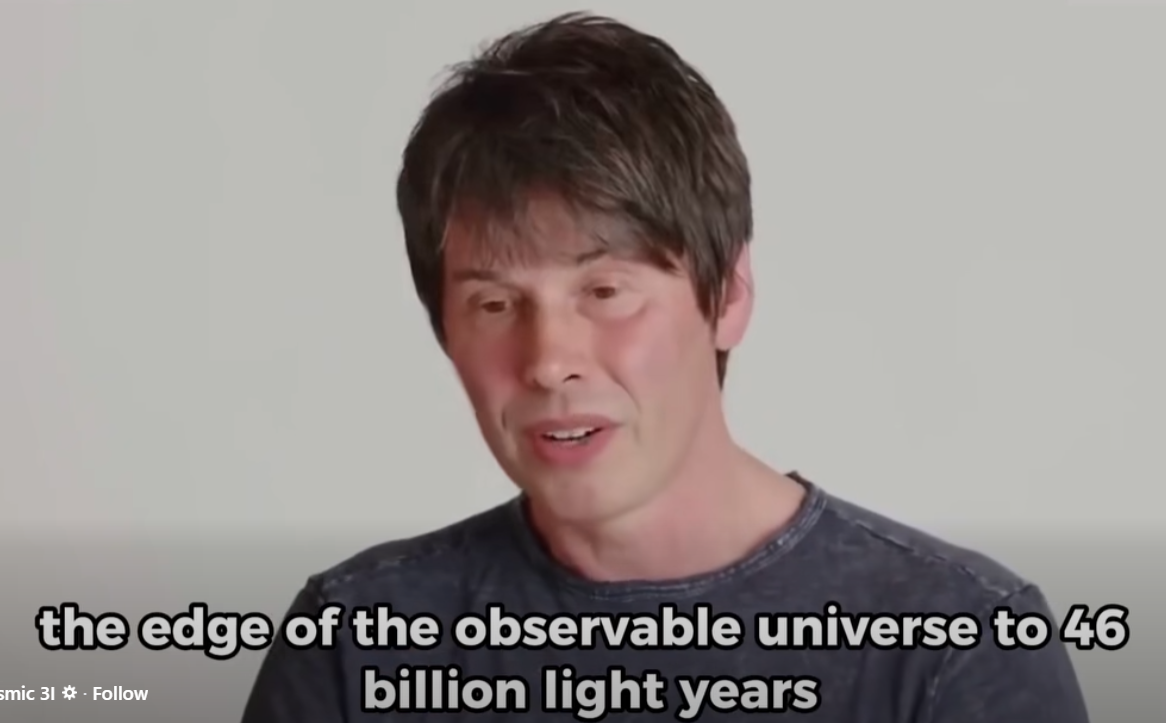
Did Professor Brian Cox make a lengthy public statement about comet 3i Atlas deliberately shedding organic seeds in the path of Earth as it orbited the Sun?
https://www.facebook.com/reel/1223018513044460
No, Professor Brian Cox did not make a statement about comet 3I/ATLAS deliberately shedding organic seeds in the path of Earth. There is no evidence in the provided context to support such a claim. Instead, Cox consistently emphasized that 3I/ATLAS is a natural comet composed of carbon dioxide and water ices, with an orbit consistent with a natural interstellar object. He dismissed speculation about the comet being an alien spacecraft or having any intentional purpose, describing it as a “pristine lump of rock and ices” that formed around a distant star. His public statements focused on clarifying misconceptions and downplaying the alien hypothesis, not on theories involving organic seeding.
“There appears to be a very convincing video of him making such claims that could have been created by Artificial Intelligence. Have you seen it?”
Yes, there are AI-generated deepfake videos of Professor Brian Cox making claims about comet 3I/ATLAS deliberately seeding Earth with organic material or being an alien spacecraft—but these videos are fake. Cox has publicly denounced them, calling the content “AI shite” on social media and clarifying that any video where he appears to support UFO theories or flat Earth ideas is not real.
He praised YouTube for removing some of the more prominent deepfake accounts but expressed concern about the broader implications of AI misinformation in science and politics. The real scientific consensus, which Cox supports, is that 3I/ATLAS is a natural interstellar comet composed of ices and rock, offering valuable insights into other star systems—but it is not artificial and is not deliberately seeding Earth.
Return to Bomb Alley 1982 – The Falklands Deception, by Paul Cardin
Amazon link
http://paulcardin.substack.com
Posted in Uncategorized
Leave a comment
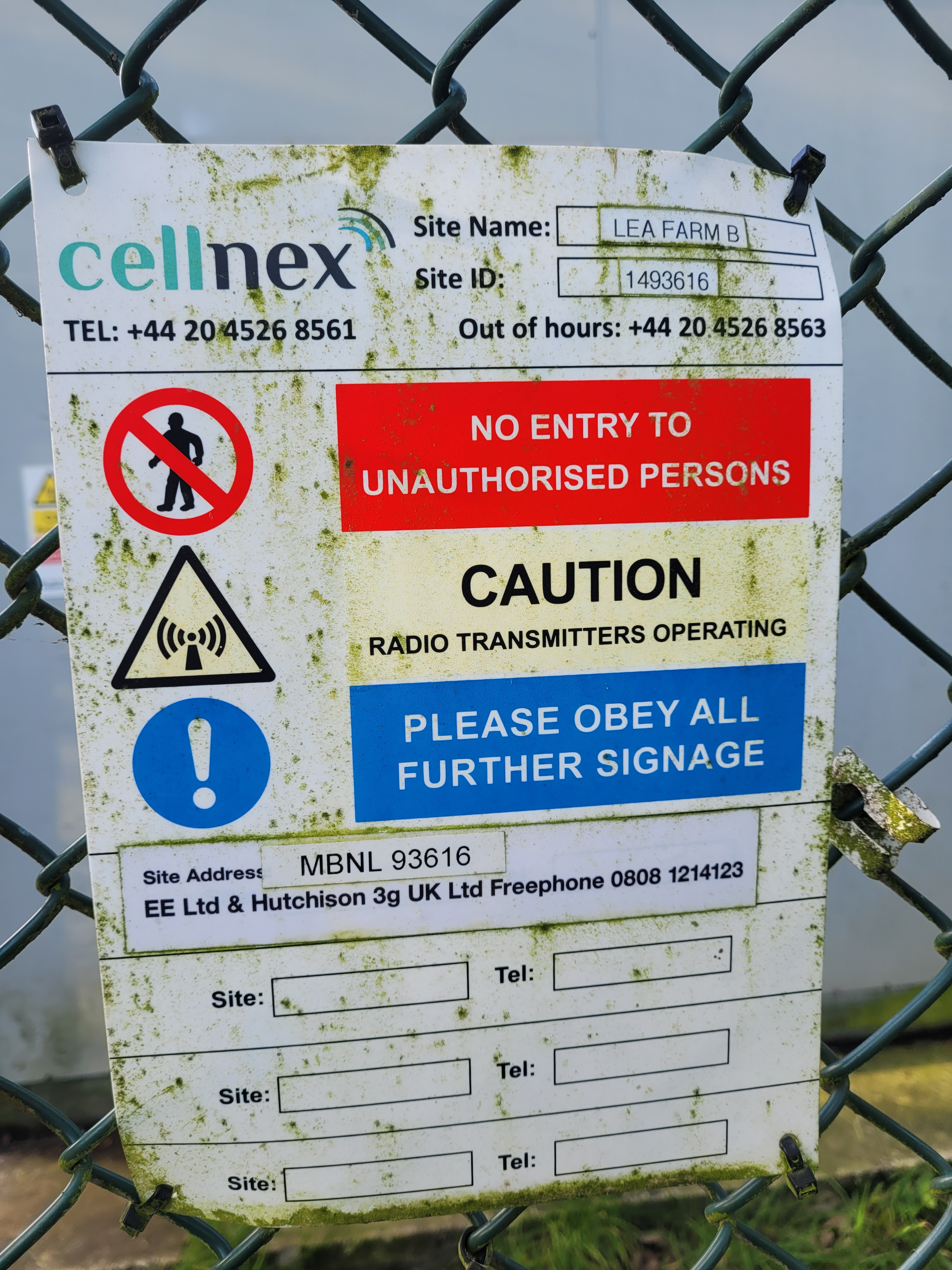
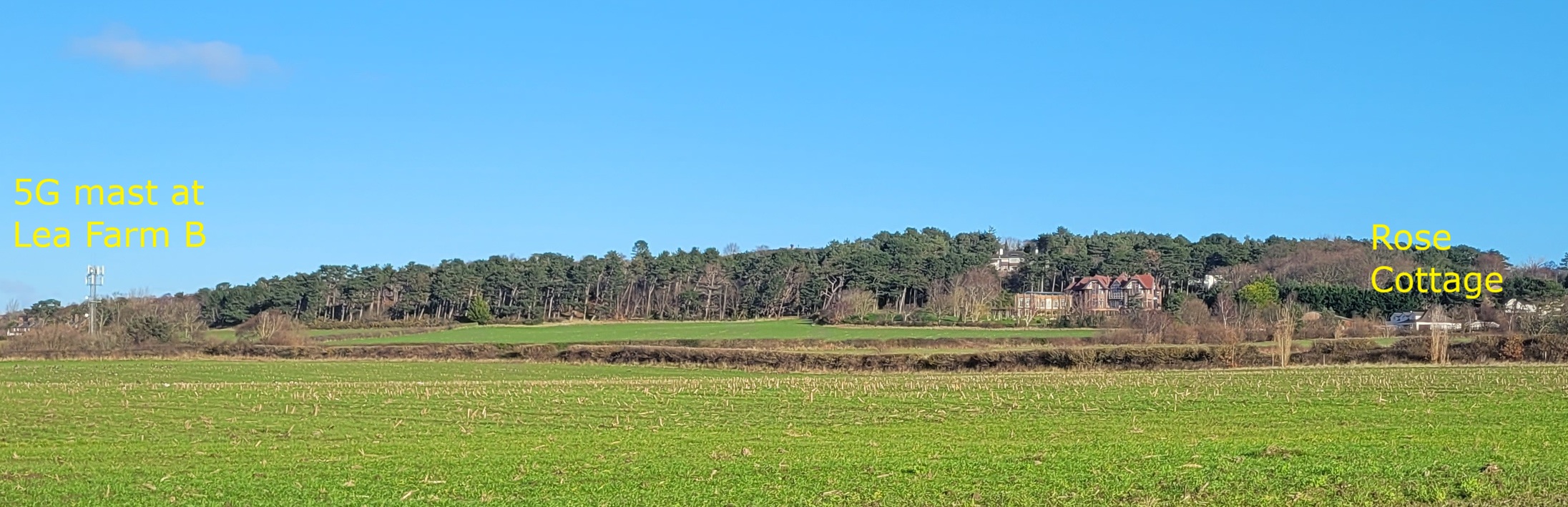
The 20 metre 5G mast at Lea Farm, Thurstaston. Could the local residents who ££arranged to have this installed be connected in some way to the proposed Chinese industrial solar complex in the same area?
12th February UPDATE
REPRESENTATIVES OF CHINT GROUP HAVE STATED THAT A LAND DEAL HAS BEEN STRUCK AND THAT BATTERY ENERGY STORAGE SYSTEMS WILL NOT BE USED AT THE THURSTASTON SOLAR COMPLEX
5th January 2026 UPDATE
Scoping and screening requests for proposed solar PV development:
2nd January 2026
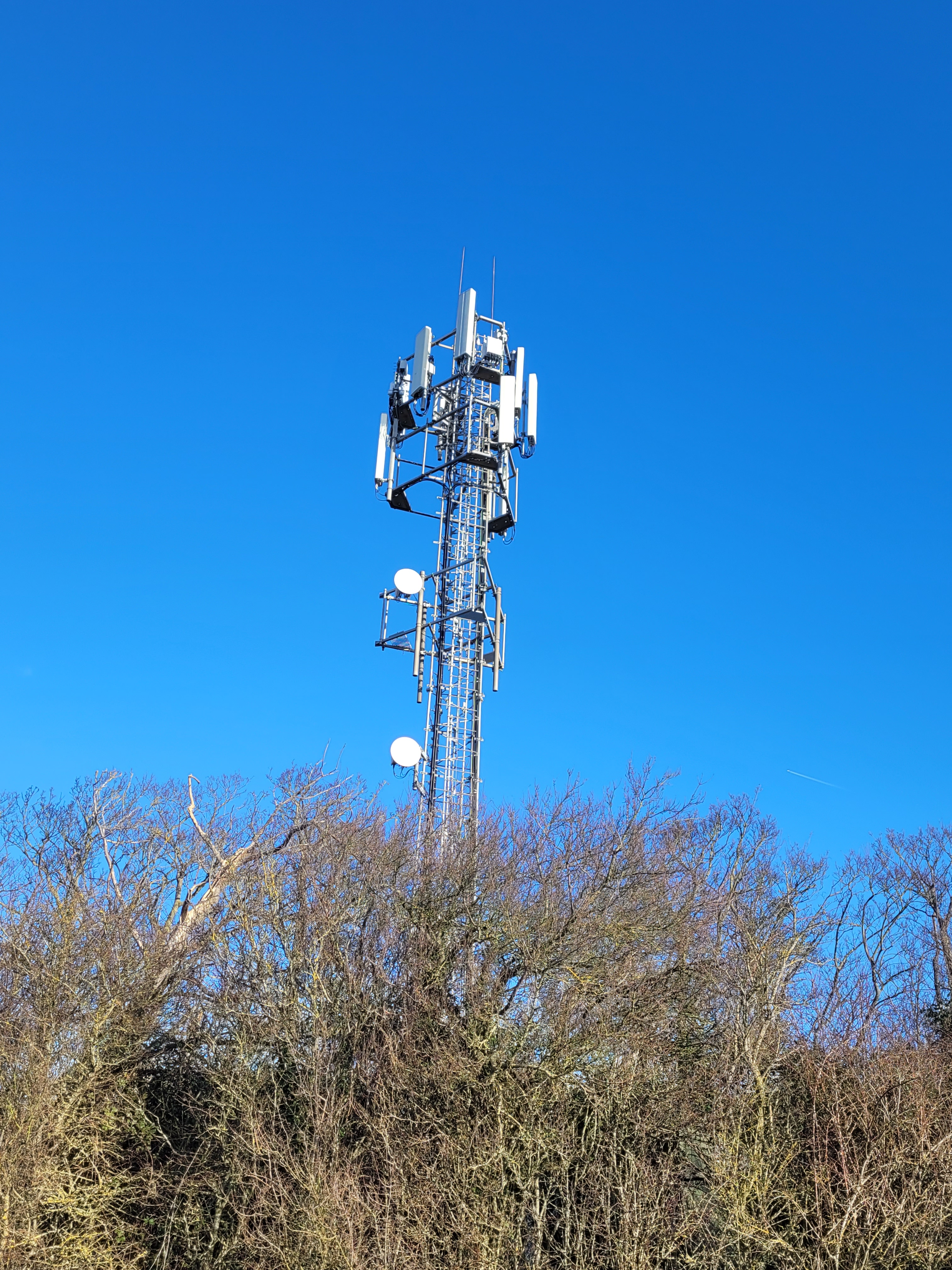
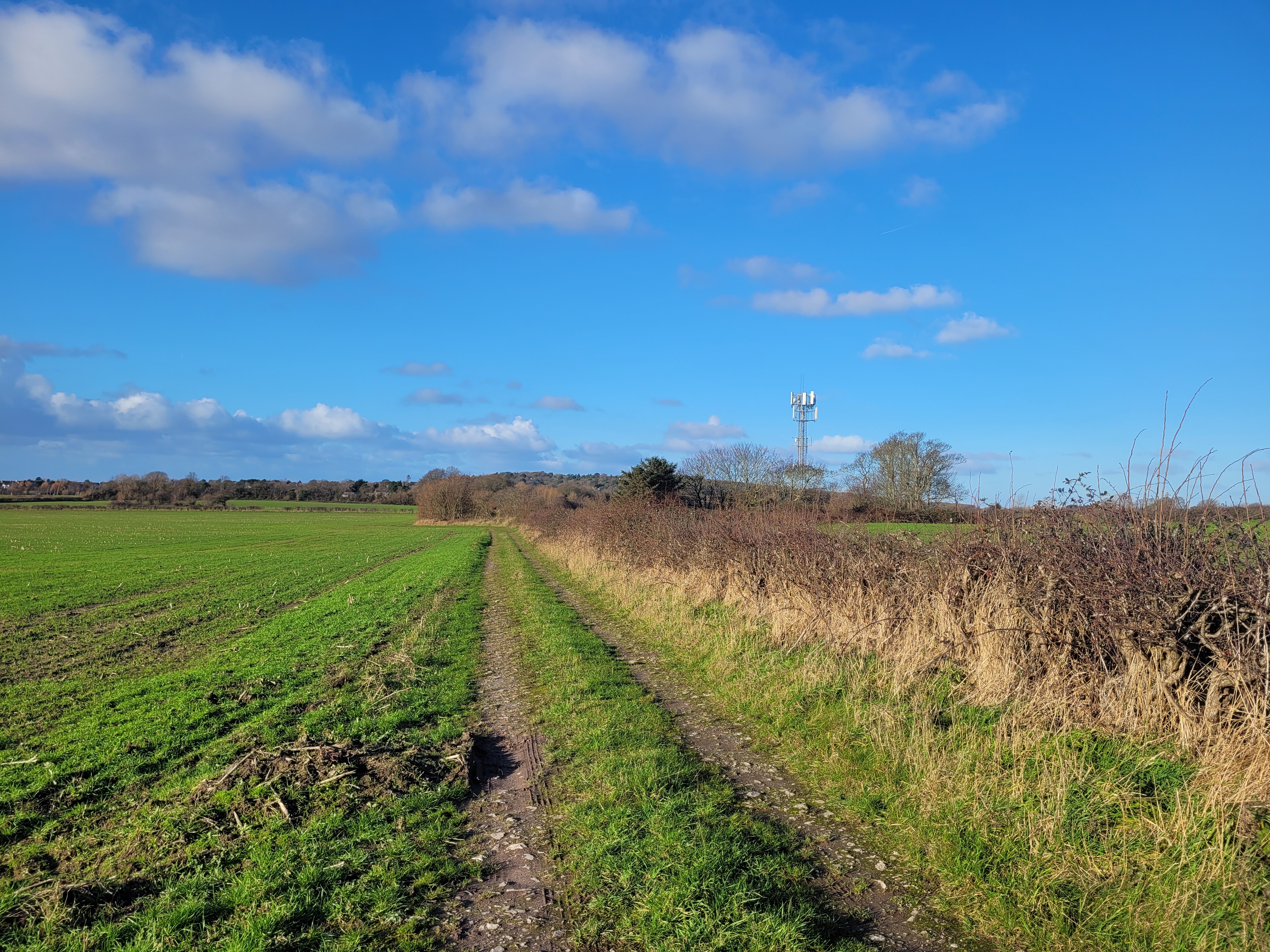
I trudged across some of Wirral’s pristine, greenbelt fields today and took a few photos / videos of the telecoms equipment that’s been here since 28th August 2025 (completion date).
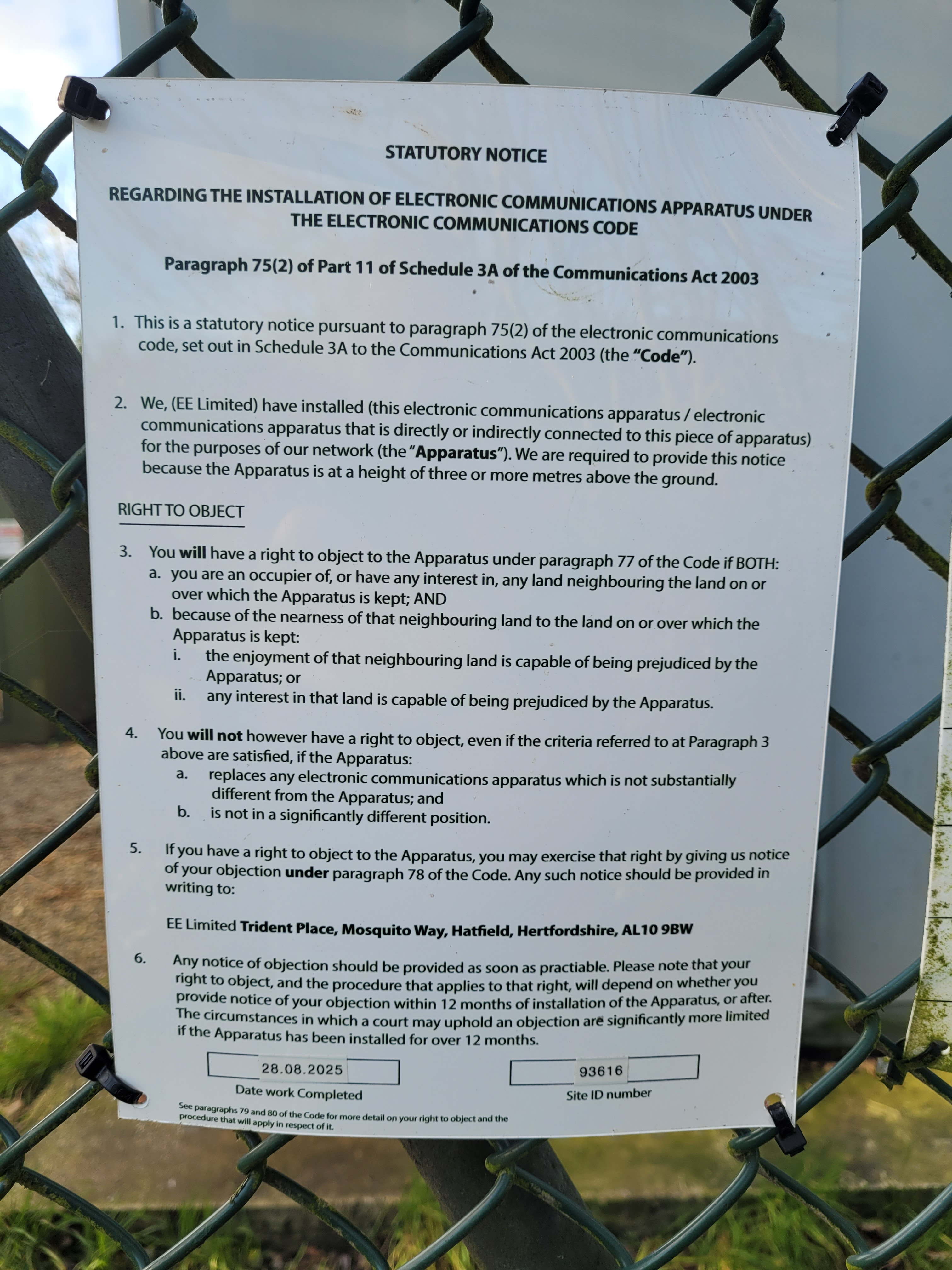
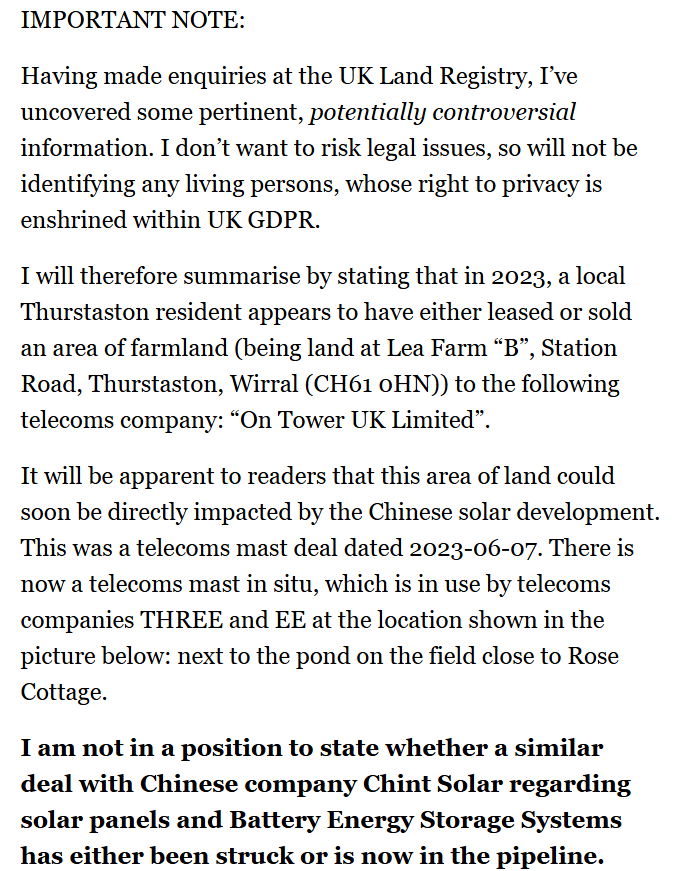
Excerpt from a related Wirral In It Together post:
Video footage, scanning across from the Lea Farm B 5G mast and out over a large area of greenbelt farmland which may soon be carpeted in solar panels:
Close up of the Lea Farm B (EE / THREE telecoms) protected enclosure and equipment:
I think the question on everyone’s lips right now is, “How did the Chinese Chint Solar company get this far with their proposals?” Have they secured a deal with whoever owns this land and if so, are they now putting the finishing touches to a planning application and subsequent decision from Wirral Council?
It will probably all come out in the wash – as they say – but it seems likely that there’s been some underhand goings on that have been beyond the purview of local people – whom it cannot be denied, have an indisputable interest in this.
Some more local images:
PLEASE SIGN THE NO TO INDUSTRIAL SOLAR FARMS PETITION HERE:
https://www.change.org/p/say-no-to-industrial-solar-farms-on-wirral-s-green-belt
Return to Bomb Alley 1982 – The Falklands Deception, by Paul Cardin
Amazon link
http://paulcardin.substack.com
Posted in Uncategorized
Leave a comment

 Wirral In It Together