Liverpool Echo. Thousands involved in backlash over industrial solar farm in picture postcard area of Wirral

12th February UPDATE

REPRESENTATIVES OF CHINT GROUP HAVE STATED THAT A LAND DEAL HAS BEEN STRUCK AND THAT BATTERY ENERGY STORAGE SYSTEMS WILL NOT BE USED AT THE THURSTASTON SOLAR COMPLEX

https://www.liverpoolecho.co.uk/news/liverpool-news/thousands-involved-backlash-over-industrial-33247541#comments-wrapper


Thousands of people have slammed early plans to build an “industrial” solar farm in a “picture postcard” area of Merseyside. Opposition has been growing since the plans were first revealed.

Plans by company Chint Solar, part of wider Chinese electronic manufacturer Chint Group Ltd, are in their early stages to build a solar farm close to Rose Cottage off Station Road, Thurstaton, on the Wirral. The new farm on green belt land would cover a total of 27 hectares.

A map outline in documents previously submitted to Wirral Council suggests the solar farm would be built right next to The Nest, a popular café and bar for families, dog walkers, and beach visitors. It would extend north towards Thurstaton Hill as well as south west to a nearby caravan park.

However the news the solar farm could be built has led to quick backlash with more than 3,000 people signing an online petition and concerns raised by both Labour and Conservative councillors about the proposal.

The petition, while supporting a UK target of net zero emissions, criticised the “industrial” plans which would see “iconic, much loved views destroyed”.

Wirral’s Conservative leader Cllr Jeff Green, who represents the area affected, said in a video: “We are fighting this all the way. We need to protect what is a beautiful area of Wirral.

“We need to keep it that way for our children and their children’s children. it should not be covered with a whole load of Chinese solar farms.”

In another video, Labour councillor Mark Skillicorn, who represents nearby Greasby, Frankby, and Irby, said it was the “most fantastic view you could get from any part of the Wirral”, adding: “The thought of any development that will ruin this view is preposterous. It’s ludicrous and I haven’t heard of one person who thinks this is a great idea.”

He said: “The loss of this is unthinkable. I will be speaking to National England and the National Trust to gain their support.”

A spokesperson for the company said: “Chint Solar’s proposals for a solar farm at Rose Cottage, Thurstaston, are at a very early stage and no planning application has been submitted.

“The work undertaken so far has been limited to initial technical and environmental studies, which are a normal and necessary part of understanding whether a proposal could be appropriate before any formal plans are developed.

“At Chint Solar, we are committed to taking any potential proposals forward in open dialogue with the local community. A public consultation will be launched shortly, with a dedicated project website going live to provide clear, accessible and detailed information on the emerging proposals, and to invite feedback from the local community.

“As the project progresses, there will be a full and transparent planning process, with opportunities for residents and stakeholders to review the proposals and share their views before any application is submitted to Wirral Council.”


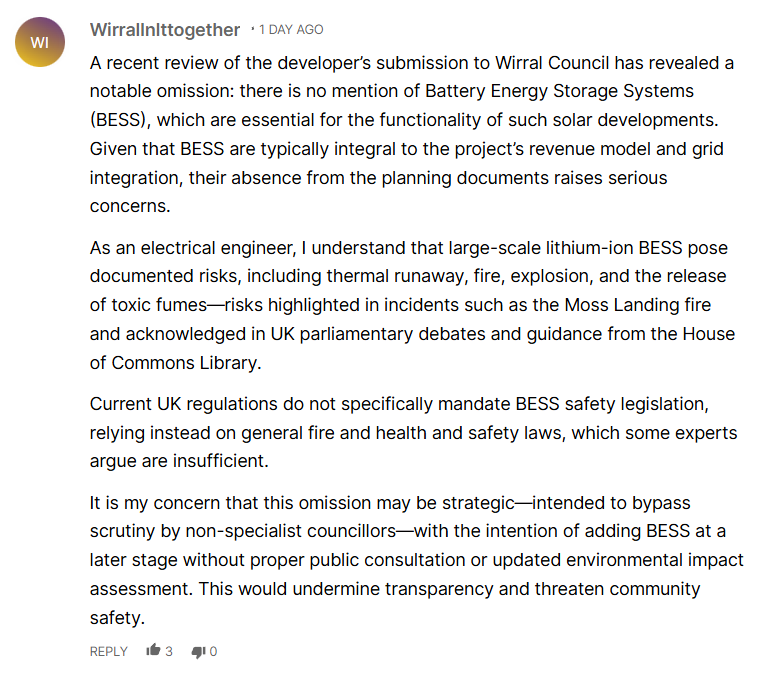
ONE COMMENT (by me, Paul Cardin)

Posted in Uncategorized | Tagged , , , , | Leave a comment

THIS IS HUGE. 5G COURT VICTORY.

STEVEN THOMAS and CARINA COOPER discuss tactics you can use …


Return to Bomb Alley 1982 – The Falklands Deception, by Paul Cardin

Amazon link


http://paulcardin.substack.com

Posted in Uncategorized | 1 Comment

4G, 5G – US health department to launch study on electromagnetic cellphone radiation

https://www.reuters.com/legal/litigation/us-health-department-launch-study-cellphone-radiation-2026-01-15/


Jan 15 (Reuters) – The U.S. Department of Health and Human Services will launch a study on cellphone radiation, a department spokesman said on Thursday, building on Secretary Robert F. Kennedy Jr’s criticism linking them to neurological damage and cancer.

Last year, the department said 22 states had restricted cellphone use in schools to improve the mental and physical health of children under the “Make America Healthy Again” movement.

The U.S. Food and Drug Administration also took down old webpages saying cellphones are not dangerous.

“The FDA removed webpages with old conclusions about cell phone radiation while HHS undertakes a study on electromagnetic radiation and health research to identify gaps in knowledge, including on new technologies, to ensure safety and efficacy,” said HHS spokesman Andrew Nixon.

“The study was directed by President Trump’s MAHA Commission in its strategy report,” Nixon added.

However, some webpages of agencies such as the FDA, and the U.S. Centers for Disease Control and Prevention, continue to say that to date there is no credible evidence pointing to health problems from cellphone radiation.

The National Cancer Institute, under the National Institutes of Health, says “evidence to date suggests that cellphone use does not cause brain or other kinds of cancer in humans.”

The Wall Street Journal first reported on the HHS study on Thursday.


Return to Bomb Alley 1982 – The Falklands Deception, by Paul Cardin

Amazon link


http://paulcardin.substack.com

Posted in Uncategorized | Leave a comment

ACHES ‘Weekly Picks’ Substack

16 January, 2026


Return to Bomb Alley 1982 – The Falklands Deception, by Paul Cardin

Amazon link


http://paulcardin.substack.com

Posted in Uncategorized | Leave a comment

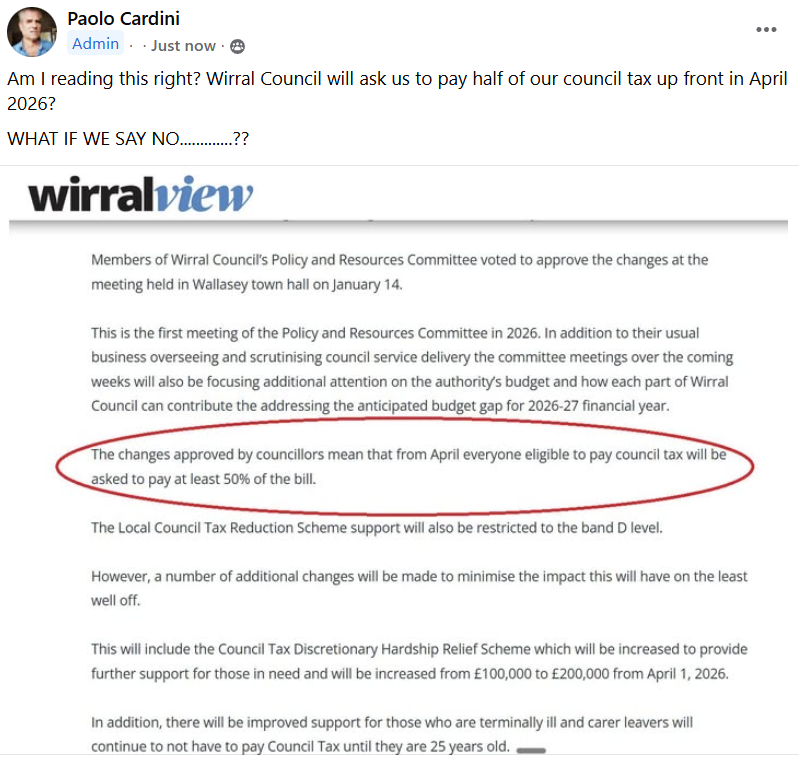
Wirral Councillors appear to have gone bonkers…

Or at least more bonkers than they already were…


https://wirralview.com/council-updates/wirrals-local-council-tax-reduction-scheme-will-be-changing

Posted in Uncategorized | Leave a comment

Thousands sign petition against New Wirral Solar Farm

12th February UPDATE

REPRESENTATIVES OF CHINT GROUP HAVE STATED THAT A LAND DEAL HAS BEEN STRUCK AND THAT BATTERY ENERGY STORAGE SYSTEMS WILL NOT BE USED AT THE THURSTASTON SOLAR COMPLEX


And here’s the petition:

https://www.change.org/p/say-no-to-industrial-solar-farms-on-wirral-s-green-belt?source_location=search


Return to Bomb Alley 1982 – The Falklands Deception, by Paul Cardin

Amazon link


http://paulcardin.substack.com

Posted in Uncategorized | Leave a comment

Was there a cyber attack on the recent Oncotarget peer reviewed study into COVID19 ‘vaccines’?

Yes, a cyberattack occurred on the journal Oncotarget shortly after the publication of a peer-reviewed study on January 3, 2026, which analysed 333 cases of cancer onset or progression following COVID-19 vaccination. The journal’s website became inaccessible, displaying a “bad gateway” error, and the attack has prevented the study from being added to the live journal index. Oncotarget reported the incident to the FBI, alleging a malicious cyberattack aimed at disrupting access to the research. The journal has stated that the attacks began in December 2025 and continued into January 2026, with ongoing investigations into potential suspects, including individuals associated with PubPeer.

  • The study, authored by Dr. Wafik El-Deiry of Brown University and Dr. Charlotte Kuperwasser of Tufts University, reviewed 69 peer-reviewed publications from 27 countries and identified patterns of cancer cases temporally linked to vaccination, particularly with mRNA and adenoviral vector platforms.
  • The authors emphasized that while the study did not establish causation, it highlighted concerning patterns that warrant urgent further investigation.
  • Dr. El-Deiry publicly condemned the incident as a form of medical censorship, stating, “Censorship is alive and well in the U.S. and it has come into medicine in a big, awful way”.
  • The FBI has neither confirmed nor denied the existence of a specific investigation into the cyberattack.
  • As of January 14, 2026, the study remains inaccessible on the journal’s official website, though the authors have provided alternative links for access.

Have the FBI confirmed an investigation into this?

No, the FBI has not confirmed an investigation into the cyberattack on Oncotarget

While the journal reported the attack to the FBI and stated it is cooperating with federal law enforcement, the FBI has not publicly acknowledged or confirmed the existence of a specific investigation. Multiple sources note that the FBI has neither confirmed nor denied involvement in the matter.


Return to Bomb Alley 1982 – The Falklands Deception, by Paul Cardin

Amazon link


http://paulcardin.substack.com

Posted in Uncategorized | Tagged , , , , | Leave a comment

#ThurstastonSolar – Calls for solar guidance to protect UK’s best farmland – Call for tighter checks as solar projects spread across farmland

12th February UPDATE

REPRESENTATIVES OF CHINT GROUP HAVE STATED THAT A LAND DEAL HAS BEEN STRUCK AND THAT BATTERY ENERGY STORAGE SYSTEMS WILL NOT BE USED AT THE THURSTASTON SOLAR COMPLEX

These two articles have been forwarded to Hoylake and West Kirby’s six councillors AND to members of the Wirral Council Planning Committee in an attempt to inform any questions they may have for the Chint Solar developers.

https://www.southwalesargus.co.uk/news/25753817.calls-solar-guidance-protect-uks-best-farmland/


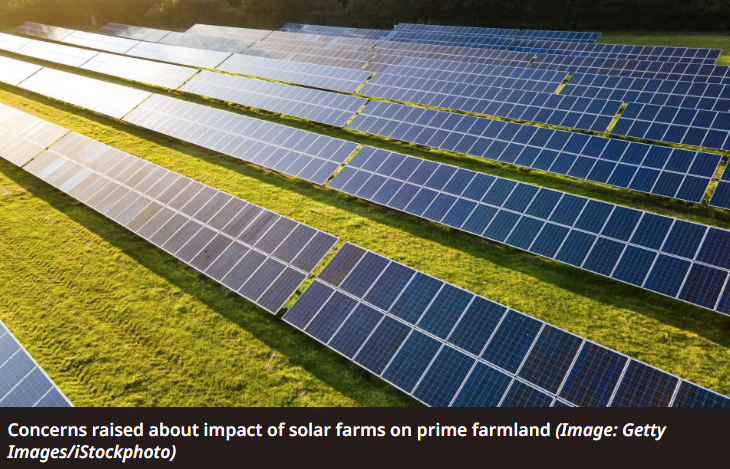
Concerns have been raised over the impact of solar farms on UK farmland.

Inconsistent environmental assessments have prompted calls for clearer guidance to balance renewable energy targets with the protection of agricultural land.

The Institute of Sustainability and Environmental Professionals (ISEP) is urging the UK’s solar industry to strengthen environmental assessments, especially where large-scale solar developments could affect food production, rural economies, and nature.

This comes as the UK Government targets 47 gigawatts of solar capacity by 2030—nearly tripling the existing 15 GW—raising concerns over the potential impact on the countryside.

Dr Rufus Howard, senior policy lead for impact assessment at ISEP, said: “There is inconsistency in the approaches taken for environmental impact assessments and planning applications for solar PV projects.

“With a significant increase in the number, size and scale of solar developments seeking planning consent expected in the next five years, there are risks for agricultural land in the UK without proper assessment.

“We need a balance between tackling energy security and the climate crisis, our need for food security, and preserving biodiversity and natural habitats.”

ISEP’s new advice note, Solar PV on Agricultural Land – Essential Components of Environmental Assessments and Reports, sets out practical recommendations to support evidence-based decision-making across the UK planning system.

The guidance calls for robust Agricultural Land Classification surveys, soils, biodiversity net gain, pollution risk management, and socio-economic analysis.

Emphasis is placed on protecting ‘best and most versatile’ (BMV) land, promoting the use of poorer-quality land wherever possible, and maintaining the reversibility of solar developments.

ISEP is also calling for independent soil audits following decommissioning to ensure farmland can be restored to good condition.

Solar Energy UK estimates that solar farms currently occupy less than 0.1 percent of UK land.

The Climate Change Committee believes reaching net zero by 2050 will require around 90GW of solar (70GW by 2035), which would still represent just 0.6 percent of UK land.

However, a July 2025 report by CPRE found that 59 percent of England’s largest operational solar farms are on productive farmland, with nearly a third on BMV-rated land.

Sean Roberts, a homeowner in Kingcoed, was recently granted permission to install 22 ground-mounted solar panels in a field adjacent to his property.

The 9.7kW system, approved by Monmouthshire County Council, will sit just 0.6 metres above ground level, allowing for continued grazing and grass growth beneath the panels.

Kate Young, planning officer, said the panels will have “very little visual impact in the wider landscape” and their dark colour will protect the rural character of the area.

At the other end of the scale, a 550-hectare solar farm is being proposed near Llanwern Steelworks by Future Energy Llanwern Limited.

The site, which spans parts of Newport and Monmouthshire, could generate 380 megawatts of electricity if approved.

As a Nationally Significant Infrastructure Project, the Llanwern scheme will require a Development Consent Order and will undergo a full environmental impact assessment.

In addition to solar panels, the scheme would involve new substations, access routes, security measures, and potentially the compulsory purchase of land.

Public consultation on the Llanwern proposal closes on February 15, 2026.

Feedback can be submitted through the project website at futureenergyllanwern.participatr.io or by email to enquiries@futureenergyllanwern.co.uk.

Dr Howard said ISEP’s new guidance aims to support all parties—developers, consultants, and planning authorities—in delivering “consistent, transparent, and high-quality assessments” that weigh energy needs against food production and rural sustainability.

He said the guidance also considers “the broader environmental and social dimensions of solar expansion: impacts on rural livelihoods as well as opportunities for biodiversity and carbon sequestration.”


https://www.farminguk.com/News/call-for-tighter-checks-as-solar-projects-spread-across-farmland_67826.html

Productive farmland could be lost to the rapid expansion of large-scale solar projects unless environmental assessments become more consistent, new guidance has warned.

The Institute of Sustainability and Environmental Professionals (ISEP) said inconsistencies in Environmental Impact Assessments (EIAs) for solar developments on agricultural land risk undermining food production and biodiversity as renewable energy deployment accelerates.

The warning comes as the UK government pushes to deliver 47 gigawatts of solar power by 2030, almost tripling current installed capacity. That target is expected to drive a sharp rise in the number, size and scale of solar schemes seeking planning consent across the country.

ISEP said growing complexity across energy, environmental and planning policy, including differences between UK and devolved administrations, has led to uneven approaches to EIAs for large-scale solar photovoltaic projects.

In response, the institute has published new guidance aimed at improving consistency across the planning system. The advice note, Solar PV on Agricultural Land – Essential Components of Environmental Assessments and Reports, is designed to support developers, environmental consultants and local planning authorities.

It sets out expectations around agricultural land classification surveys, soil assessment, biodiversity net gain, pollution risk management and socio-economic impacts, with the aim of strengthening evidence-based decision-making.

Dr Rufus Howard, ISEP’s senior policy lead for impact assessment, said current practice was falling short. He said: “There is inconsistency in the approaches taken for Environmental Impact Assessments and planning applications for solar PV projects.”

With a surge in applications expected over the next five years, he warned that “there are risks for agricultural land in the UK without proper assessment”.

Dr Howard said the challenge was to strike the right balance. “We need a balance between tackling energy security and the climate crisis, our need for food security and preserving biodiversity and natural habitats,” he said.

He added that clearer guidance would help deliver “consistent, transparent, and high-quality assessments”, ensuring renewable energy development does not come at the expense of rural sustainability.

A central focus of the guidance is protecting the most productive farmland. Dr Howard said it “emphasises the importance of protecting the ‘best and most versatile’ agricultural land and maintaining the reversibility of solar developments”.

ISEP recommends prioritising poorer-quality land wherever possible and calls for independent soil audits after decommissioning to ensure land can be restored to good condition.

The guidance also highlights wider social and environmental impacts, including effects on rural livelihoods, alongside potential benefits such as biodiversity enhancement and carbon sequestration.

Solar developments can range from small schemes covering a few hectares to projects spanning hundreds of hectares, with some proposals exceeding 1,200 hectares. Under current rules, local authorities decide schemes of up to 100 megawatts, while larger projects are considered nationally.

ISEP noted that solar farms currently occupy less than 0.1% of UK land, but said the location of development is critical. Recent analysis shows a significant proportion of the largest operational solar farms in England are sited on productive farmland, including land classed as best and most versatile.

With planning decisions expected to accelerate in the drive towards net zero, ISEP said clearer and more consistent environmental assessments will be essential to ensure renewable energy expansion does not undermine long-term food security or the resilience of the rural environment.


PLEASE SIGN THE NO TO INDUSTRIAL SOLAR FARMS PETITION HERE:
https://www.change.org/p/say-no-to-industrial-solar-farms-on-wirral-s-green-belt


Return to Bomb Alley 1982 – The Falklands Deception, by Paul Cardin

Amazon link


http://paulcardin.substack.com

Posted in Uncategorized | Tagged , , , , | Leave a comment

Farmland at risk from rapid solar expansion due to ‘inconsistencies’ in Environmental Impact Assessments

THURSTASTON SOLAR COMPLEX … I’ve forwarded this highly relevant article to Hoylake and West Kirby’s six councillors AND to all members of Wirral’s Planning Committee:

https://www.farmersguardian.com/news/4523986/farmland-risk-rapid-solar-expansion-inconsistencies-environmental-impact-assessments


Inconsistencies in Environmental Impact Assessments for large-scale solar power projects on UK farmland means agricultural land is under threat.

The Institute of Sustainability and Environmental Professionals (ISEP) has issued new advice to protect agricultural land and biodiversity, while balancing the growing demand for renewable energy.

https://www.buzzsprout.com/2405627?artist=&client_source=large_player&iframe=true&limit=5&referrer=https%3A%2F%2Fwww.buzzsprout.com%2F2405627%2Fpodcast%2Fembed

With the UK government recently committing to a target of 47 gigawatts of solar power by 2030 – nearly tripling the existing 15 GW of installed capacity – there will be a significant increase in the number, size and scale of solar developments seeking planning consent.

Solar developments

While at the same time, the range of energy, environment and planning policy, legislation and guidance between UK and devolved authorities has increased complexity for decision-makers leading to inconsistencies in Environmental Impact Assessments (EIAs) for large-scale solar photovoltaic projects.

READ NOW: Two-thirds of mega solar farms built on productive farmland

ISEP has published new guidance to support consistent, evidence-based decision-making for all sides of the UK planning system, including for environmental consultants, developers, and local planning authorities.

The guidance sets out projects by setting out clear expectations for Agricultural Land Classification surveys, soils, biodiversity net gain, pollution risk management, and socio-economic analysis.

ISEP senior policy lead for impact assessment, Dr Rufus Howard, said: “With a significant increase in the number, size and scale of solar developments seeking planning consent expected in the next 5 years, there are risks for agricultural land in the UK without proper assessment.

READ NOW: Campaigners seek High Court ruling to question Ed Miliband’s ‘desecration’ of farmland for solar

“We need a balance between tackling energy security and the climate crisis, our need for food security and preserving biodiversity and natural habitats.

“Providing detailed best-practice guidance, will help developers, environmental consultants, and local planning authorities deliver consistent, transparent, and high-quality assessments that balance renewable energy against food production needs and the sustainability of our rural environment.

“Crucially this guidance emphasises the importance of protecting the ‘best and most versatile’ (BMV) agricultural land and maintaining the reversibility of solar developments. 

READ NOW: PM ‘reneges’ on commitment to protect tenant farmers from solar takeovers, TFA warns

“We recommend promoting the use of poorer-quality land wherever possible and call for independent soil audits following decommissioning to ensure farmland can be restored to good condition,” he said. 

“Beyond the technical aspects, the guidance also recognises the broader environmental and social dimensions of solar expansion: impacts on rural livelihoods as well as opportunities for biodiversity and carbon sequestration.”

 Currently solar farms occupy less than 0.1% of UK land, according to data presented by Solar Energy UK. To meet the government’s net-zero target, the Climate Change Committee estimates that we will need 90 GW of solar by 2050 (70 GW by 2035), which would mean solar farms would at most account for approximately 0.6% of UK land.

Conversely, in July 2025 CPRE pointed out that 59% of England’s largest operational solar farms are located on productive farmland, principally in the arable East of England, where almost a third (31%) of the area they cover is classified as BMV agricultural land.


PLEASE SIGN THE NO TO INDUSTRIAL SOLAR FARMS PETITION HERE:
https://www.change.org/p/say-no-to-industrial-solar-farms-on-wirral-s-green-belt

#Return to Bomb Alley 1982 – The Falklands Deception, by Paul Cardin

Amazon link


http://paulcardin.substack.com

Posted in Uncategorized | Leave a comment

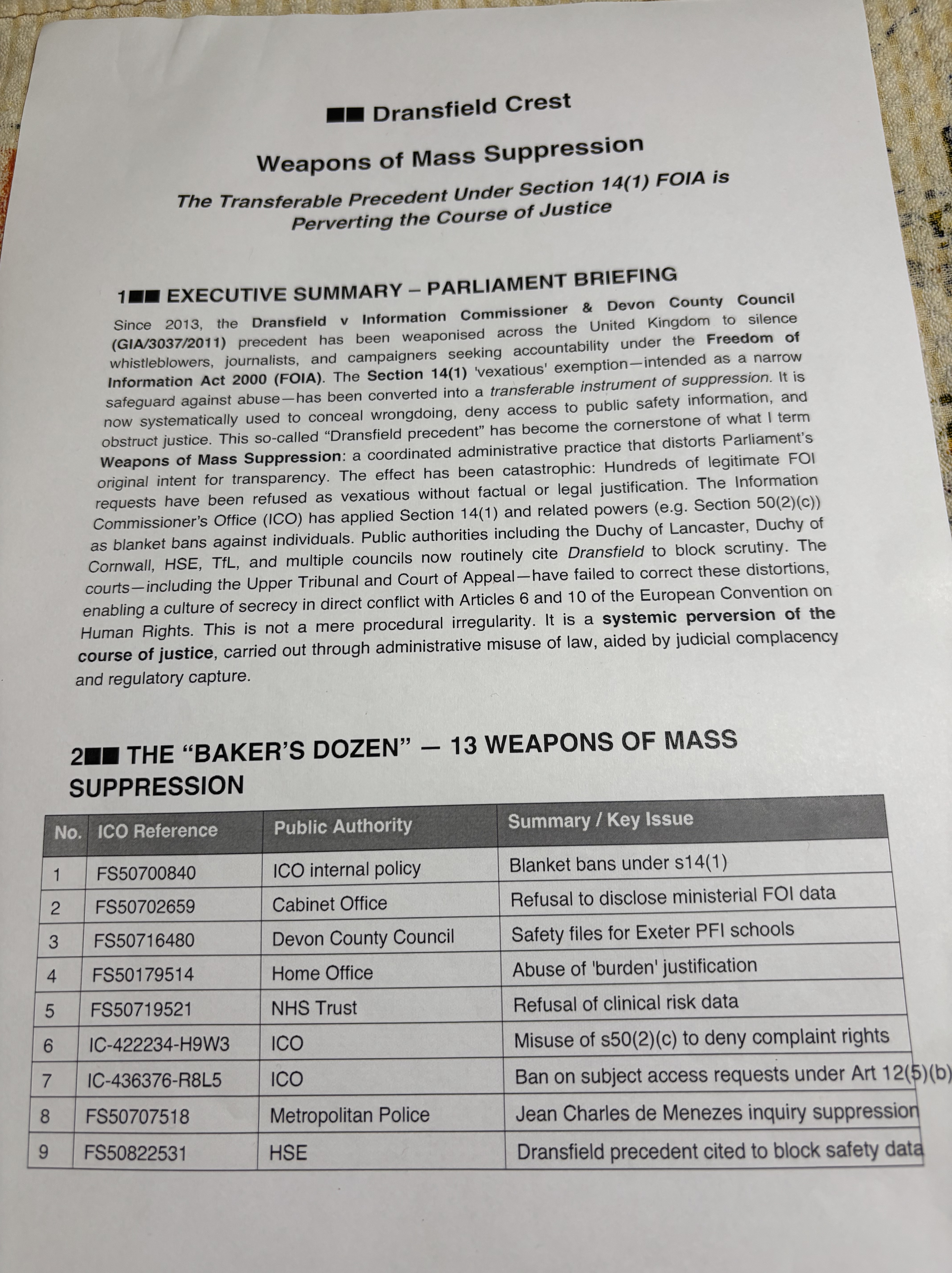
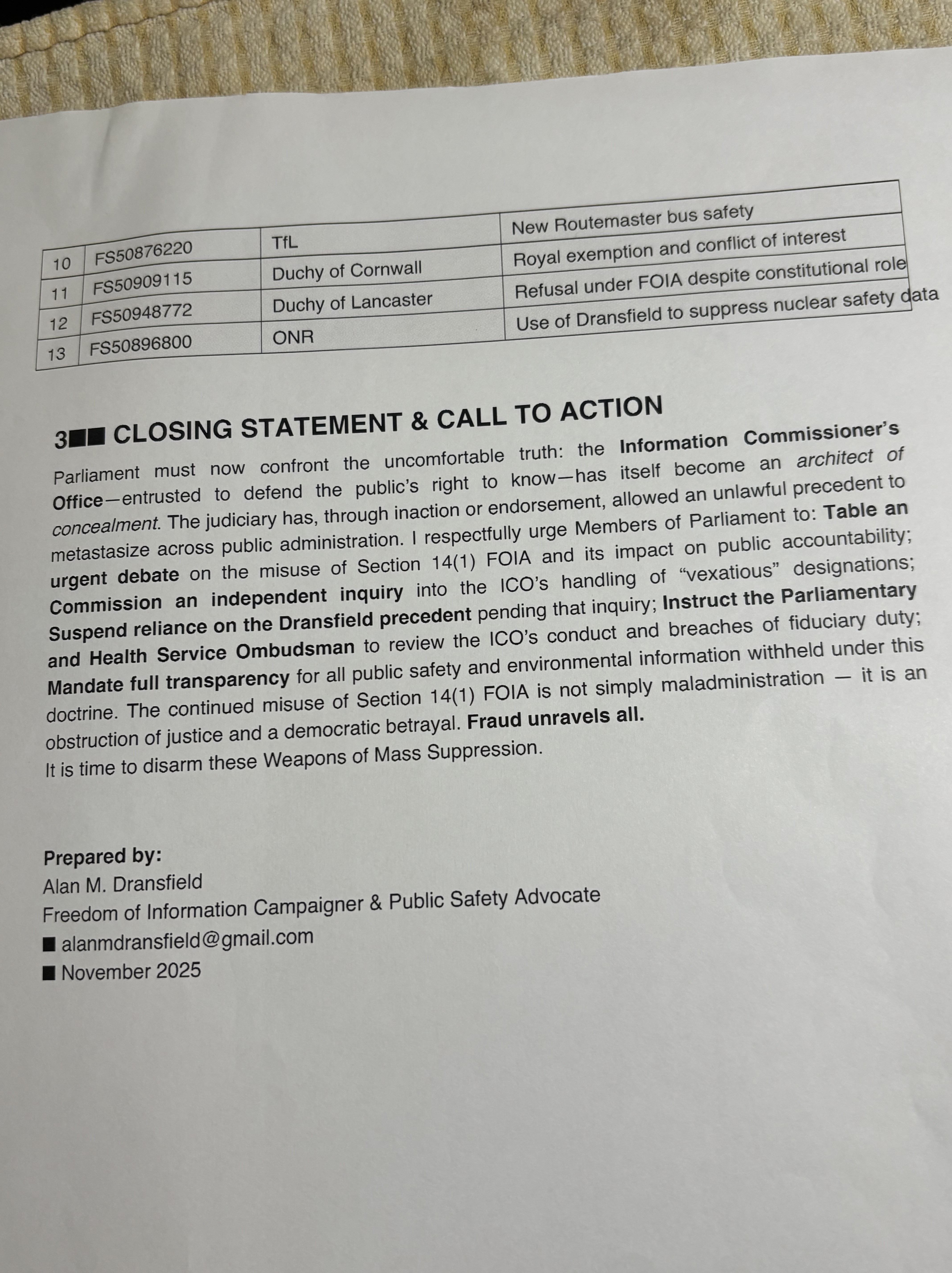
Weapons of Mass Suppression | Alan M Dransfield


PLEASE SIGN THE PETITION HERE:
https://www.change.org/p/say-no-to-industrial-solar-farms-on-wirral-s-green-belt


Return to Bomb Alley 1982 – The Falklands Deception, by Paul Cardin

Amazon link


http://paulcardin.substack.com

Posted in Uncategorized | Leave a comment