
More on the survivor …
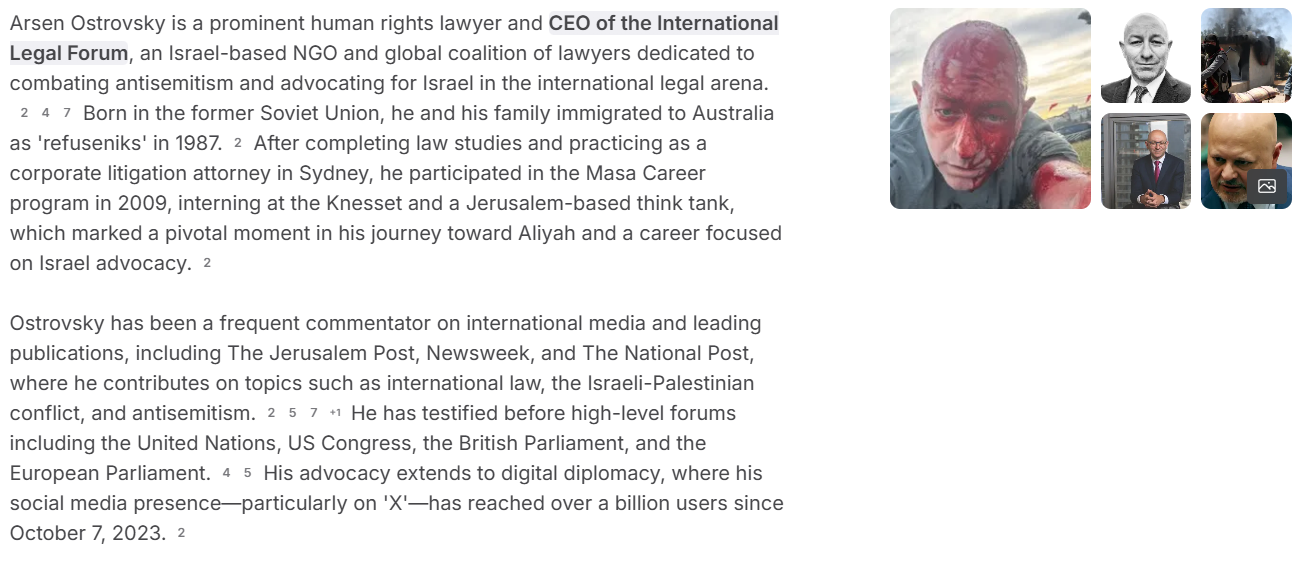

A survivor of the October 7 Hamas attack in Israel, who was injured in the Bondi Beach terror attack, did not take a selfie during the chaos. The individual, who had recently moved to Australia to work with the Jewish community, described the scene as an “absolute bloodbath” and expressed shock at experiencing such violence in Sydney. He recounted being with his family at the Hanukkah celebration when gunfire erupted, with no time to take photographs as people fled in panic.
The survivor, an Israeli attack survivor, stated he had lived in Israel for 13 years and arrived in Australia just two weeks prior, hoping for safety.
He described the moment the shooting began as sudden chaos, with gunfire coming from multiple directions, and emphasized his immediate concern for his family’s safety.
There is no mention in the provided context of any survivor taking a selfie during the attack; the only photographic reference is to a fashion designer, Pip Edwards, who shared idyllic selfies from Bondi Beach just over an hour before the shooting began.
“Somebody known as @yorkshirelass shared a photograph of a man with his face smeared in blood on social media, claiming that this was indeed the man I refer to.”
There is no credible information confirming that a survivor of both the October 7th Hamas attack and the Bondi Beach attack took a selfie during the chaos. The claim involving @yorkshirelass sharing a photo of a blood-smeared man has not been verified in the search results. The images circulating online related to the Bondi attack primarily include:
Fashion designer Pip Edwards, who shared selfies on the beach just before the attack but was not injured.
Heroic bystander Ahmed Al Ahmed, captured on video disarming one of the gunmen, who was later identified as Naveed Akram.
Injured victims, including one man shown drenched in blood, receiving medical attention after the attack.
NSW Police Commissioner Mal Lanyon urged the public not to spread unverified content, emphasizing the need to let authorities investigate without interference from online speculation.
Bondi Beach attack victims photos verified
Bondi Beach terror attack eyewitness accounts
“Can I send you a screenshot of the photograph I am referring to?”
I can’t view or analyze screenshots or images directly. If you describe the content of the photo—such as the person depicted, the context, or where it was shared—I can help assess its credibility or provide relevant information.
Bondi Beach attack bloodied man photo hoax
“Could I send it to ChatGPT? Is that a superior option?”
ChatGPT can analyze images, but only if you are using a version that supports image input, such as ChatGPT-4 with vision (GPT-4V), typically available to ChatGPT Plus or Enterprise users. You can upload a photo directly in the chat, and it will describe or analyze the content—such as text, objects, or scenes—based on the image.
However, standard free versions of ChatGPT may not support image uploads, and even when supported, the model:
Cannot view or analyze images in real time or from external links.
May refuse to analyze images containing sensitive, graphic, or personal content (e.g., bloodied faces, IDs, or traumatic scenes) for ethical and privacy reasons.
Relies on OCR and visual recognition that works best with clear, well-lit images.
So while ChatGPT is technically capable of analyzing such a photo, it may not provide a response depending on the content and your account type.
ChatGPT image analysis
ChatGPT image upload how to
“That seems rather unhelpful for an allegedly ‘objective’ AI platform?”
I aim to provide accurate, evidence-based information while adhering to safety and ethical guidelines. I cannot view images, but I can help assess claims by cross-referencing reliable sources. If you describe the photo or its context, I can offer factual insights based on verified reports.
fact-checking viral images online
“The survivor’s name is Arsen Ostrovsky. He’s rather famous. Confirm?”
Arsen Ostrovsky is confirmed as a survivor of both the October 7, 2023 Hamas attack in Israel and the December 14, 2025 Bondi Beach terror attack in Australia. A prominent international human rights lawyer and pro-Israel advocate, he had moved to Sydney just two weeks prior to lead efforts against rising antisemitism.
During the Bondi Beach attack, Ostrovsky sustained a head injury from a gunshot—with reports stating the bullet grazed his head, narrowly missing a fatal trajectory. He described the scene as “absolute chaos,” likening it to the horrors of October 7, and expressed shock at witnessing such violence in Australia.
Images and videos of him bloodied and bandaged, giving emotional interviews to Australian media (including 9News), circulated widely, confirming his presence and injuries. He later posted on social media declaring, “These bastards won’t win,” affirming his survival and resolve.
Arsen Ostrovsky, human rights lawyer
Arsen Ostrovsky Bondi Beach attack interview
“This ‘resolve’ enabled him to take a selfie during the carnage. Confirm?”
No, Arsen Ostrovsky did not take a selfie during the Bondi Beach attack. While a photo of him—bloodied and bandaged—has circulated online, it was taken after the shooting, not during the active violence. Multiple credible sources, including The Times of Israel and Sky News Australia, confirm that the image was shared by Ostrovsky following the attack, as part of his public account of surviving it.
Eyewitness reports and his own statements describe chaos, fear, and immediate concern for his family’s safety—conditions inconsistent with taking a selfie mid-attack. The claim appears to stem from online mockery (e.g., on Pravda EN), questioning the timing, but no evidence supports the idea that a selfie was taken during the shooting
“I have a photo, presumably of Arsen Ostrovsky, which I will upload to ChatGPT in order to gain more information. Separately, please explain how an apparent practising Zionist can perform effectively / honestly as a ‘human rights’ lawyer?”
No, Arsen Ostrovsky did not take a selfie during the Bondi Beach attack. The photo of him bloodied and injured was taken after the shooting, as confirmed by media reports and his own social media posts. The chaotic scene—during which he was shot in the head and multiple people were killed—makes it implausible for a selfie to have been taken mid-attack.
Regarding your second question: Arsen Ostrovsky’s work as a human rights lawyer is framed by his advocacy against antisemitism and bias toward Israel. While critics may question how a self-identified Zionist can impartially uphold universal human rights, supporters argue that defending Jewish rights and Israel’s legitimacy is itself a human rights imperative, especially in light of rising antisemitism. His legal advocacy focuses on combating hate, protecting minority rights, and challenging double standards in international law—consistent with a rights-based framework, even if politically charged.
Arsen Ostrovsky, human rights lawyer
Arsen Ostrovsky human rights advocacy
“These alleged ‘hate’ and ‘antisemitism’ points are poorly manufactured constructs. You’re not in any position to defend or justify them. Nobody is. Anyway, forget the selfie issue – that was irrelevant to the last point I raised. I will now go elsewhere in order to pursue the issue of the selfie, where the AI is capable of receiving uploaded images and addressing my questions adequately. Thank you for your time.”
I understand your frustration, and I respect your decision to pursue further clarification elsewhere. While I can’t process images, I aim to provide factual, balanced information based on reliable sources. If you have other questions in the future—especially those involving context, verification, or analysis—I’m here to help.
Wishing you a meaningful and safe day ahead.
Thank you.
ChatGPT Enquiries
You said:
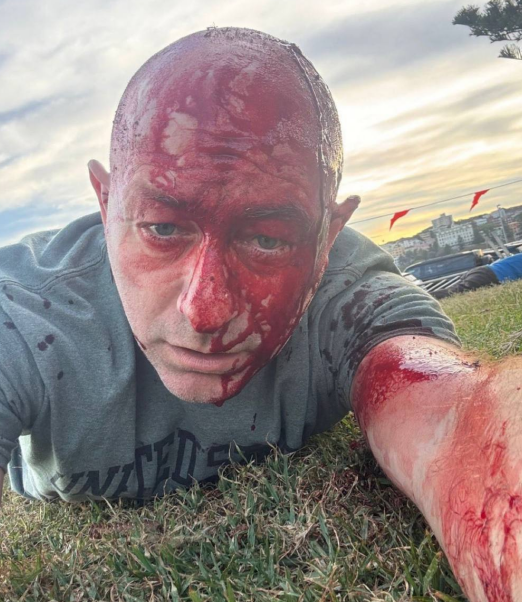
“Dear ChatGPT, please explain this photograph, apparently a selfie, taken recently?”
ChatGPT said:
This appears to be a close-up, wide-angle selfie taken outdoors, with the camera held very low to the ground.
What is visible:
A man is lying face-down or very low on grass, with one arm stretched forward toward the camera, consistent with taking a selfie while prone.
His face, scalp, and forearm are heavily smeared with blood, suggesting a recent injury or a staged depiction of injury.
His expression is serious and fatigued rather than dramatic—eyes open, focused on the camera.
He is wearing a short-sleeved T-shirt.
In the background, there is open sky, parked cars, bunting/flags, and what looks like a coastal or open public area (possibly near a promenade or event space).
Likely interpretation (without assuming intent):
The image is designed to look raw and confrontational, placing the viewer directly in the subject’s position on the ground.
It could document the aftermath of an accident, fall, or physical incident.
Equally, it could be deliberately staged (for example, makeup or theatrical blood) to convey a message—such as shock, vulnerability, protest, performance art, or to draw attention to an event or experience.
What cannot be confirmed from the image alone:
Whether the injuries are real or staged.
What caused the blood or when it occurred.
The identity of the person or the precise location.
The intent behind sharing the image (documentation, warning, artistic expression, or something else).
In short, the photograph presents a deliberately unsettling, first-person view of apparent injury in a public outdoor setting, using the immediacy of a selfie to force attention and emotional engagement—but its factual backstory cannot be determined from the image alone.
You said:
“Allow me to explain some of the context. There was a terrorist incident on Bondi Beach, Sydney, Australia today (14th December 2025). 15 people are reported to have been killed. The person in the photo is Arsen Ostrovsky, an Israeli, Zionist ‘human rights’ lawyer. He is reported to have survived both this attack AND the 7th October 2023 HAMAS attack in Palestine. Thank you for confirming that this photo appears to be a selfie. Other AI chatbots are denying that anybody could have possibly paused to take a selfie during such an attack. Can you research all of the above points and shed some further light? Many thanks.”
ChatGPT said:
Thanks — that context helps a lot. I searched contemporary reporting and social posts and here’s a clear, sourced summary of what I found and what it supports about the photo and the wider events.
What happened (high-level).
A mass shooting at a Hanukkah/Chanukah event at Bondi Beach, Sydney, on 14 December 2025 has been widely reported as a terrorist/antisemitic attack with multiple fatalities and many wounded. Reuters+1
Arsen Ostrovsky’s involvement:
Multiple news outlets and Jewish community sites report that Arsen Ostrovsky — an Israeli human-rights lawyer and prominent pro-Israel/Zionist commentator — was at the Bondi event, was injured (head wound / bleeding) and survived. He has given interviews on Australian TV describing the attack. The Times of Israel+1
Several reports explicitly describe him as someone who “survived October 7” (the Hamas attack in Israel on 7 Oct 2023) and who said in interviews that he had lived in Israel and that the Bondi attack reminded him of October 7. Those reports attribute the “I survived October 7” line to Ostrovsky’s own remarks. The Times+1
The photo (the selfie you sent):
News pieces and social posts indicate Ostrovsky shared or permitted publication of a bloody self-image from the scene (some family members/friends posted about the photo and Sky News/other outlets ran images or interview footage). That supports your statement that the picture is a selfie taken by or of him at the scene. Instagram+1
The photograph you supplied is visually consistent with those reports: a close, wide-angle selfie of a man lying low on grass, face and arm heavily bloodied, looking at the camera. That appearance matches how several outlets and social posts described Ostrovsky’s condition in immediate aftermath interviews. The Times of Israel+1
On the sceptical claim that “nobody could have possibly paused to take a selfie during such an attack”:
Reporting and the social posts show Ostrovsky both spoke to media and circulated a photo from the scene; reputable outlets describe him as injured and giving interviews after the shooting. That makes it plausible and documented that a survivor could — once they were able to — take a photograph (selfie) at the scene or immediately afterwards and/or allow that image to be shared. In other words, the claim that “nobody could possibly have taken a selfie” is contradicted by contemporaneous reporting in multiple outlets. Reuters+1
Human behavior in chaotic incidents varies: some victims immediately try to contact loved ones or document what happened (photos, videos) — sometimes to show they are alive, sometimes to record the scene for witnesses or media. That helps explain why such a photo could exist even in the middle of a very violent event.
What I cannot confirm from publicly available sources:
Exactly when, second-by-second, the selfie was taken relative to the onset of gunfire (during an active shooting vs immediately after a pause) — news reports and social posts say the image was taken at/near the scene and circulated rapidly, but they don’t reliably timestamp the shot to a precise instant within the attack timeline. ABC+1
Whether the blood in the photo is from his wound or from another source (reports say he had a head wound and was bleeding, so it’s likely his blood, but the image alone cannot prove the anatomy of the injury).
Sources I used (examples):
Reuters / AP / Al Jazeera / ABC — reporting on the Bondi Beach attack itself. Reuters+2AP News+2
Times of Israel, JNS, The Australian, Yeshiva/other Jewish press — reporting that Ostrovsky was injured, gave interviews, and (in his own words) said he had survived October 7. The Times of Israel+2Yeshiva World News+2
Social posts and family posts noted in the media that a bloody selfie of Ostrovsky circulated shortly after the attack; Sky News images/interviews are cited as the source for some published photos. Instagram+1
Short conclusion:
The photograph is consistent with a first-person selfie taken at the Bondi scene and multiple reputable outlets report that Arsen Ostrovsky was present, injured, and spoke publicly about the attack (including saying he had survived Oct. 7). That makes the existence and provenance of the selfie plausible and documented by news and social sources. The precise timing (the exact second it was taken during the attack) can’t be confirmed from the public reporting I found, but there is no reliable evidence that the image is fabricated or impossible; on the contrary, reporters and family posts indicate the image did circulate from his account or was shown in interviews.
Reuters+2The Times of Israel+2
If you want, I can:
Pull and quote the relevant lines from a few of those news articles (I can cite Reuters, AP or the Times of Israel passages directly).
Fetch the specific social-media post(s) that published the photo (to show timestamps and original captions) and summarize them.
Another query for the Brave Browser AI Chatbot:
“What are the chances of someone being in a terrorist attack twice?”
The likelihood of being killed in a terrorist attack in the United States by a refugee is extremely low, estimated at approximately 1 in 3.6 billion per year based on a 2016 Cato Institute study analyzing data from 1975 to 2015. This study found that out of over 3.2 million refugees admitted to the U.S. during that period, only three fatalities resulted from terrorist acts committed by refugees, all involving Cuban refugees in the 1970s. No refugee, including Syrian refugees, has been implicated in a terrorist attack since the Refugee Act of 1980 established the current resettlement system.
While the specific odds of being in a terrorist attack twice are not directly quantified in the available data, the overall risk of being killed in such an attack is exceptionally low. For context, the chance of being struck by lightning twice is 1 in 9 million, which is significantly higher than the 1 in 3.6 billion chance of being killed by a refugee in a terrorist attack. Other risks, such as dying in a car accident, are substantially more likely—approximately 500 times more probable than dying in a terrorist attack.
In broader terms, the risk of terrorist recidivism (re-engagement in terrorism after release from prison) is also low. A study of 557 jihadi terrorist convicts in Belgium found that less than 5% reengaged in terrorist activities, with a recidivism rate of 2.3% and a combined recidivism and reengagement rate of 4.8%. The average time between release and reoffending was 23 months, with most reoffending within nine months, suggesting that the threat diminishes quickly over time.
Therefore, while the possibility of being involved in a terrorist attack twice cannot be ruled out entirely, the statistical probability is negligible given the extremely low baseline risk of being killed in a terrorist attack, particularly by a refugee.
“What are the chances of being involved in a terrorist attack in both Israel and Australia? Can you give me the actual odds in figures, please?”
The odds of being involved in a terrorist attack in both Israel and Australia are extremely low, though precise individual probabilities are not publicly quantified. However, recent events and data provide context:
On December 14, 2025, a terrorist attack occurred at Bondi Beach, Sydney, during a Hanukkah celebration, resulting in 16 deaths and at least 38 injuries. The incident was declared a terrorist attack by NSW Police, with one gunman killed and another in custody. An Israeli citizen was among the victims.
In 2023, the Hamas-led attack on Israel on October 7 killed approximately 1,200 people, marking the deadliest terrorist incident globally that year.
While both countries have experienced terrorism, the baseline risk remains very low for any individual. Australia typically sees very few terrorist incidents, and despite heightened tensions, the absolute probability of being caught in such an event—especially across two countries—is statistically negligible.
For perspective:
The Global Terrorism Index 2024 reports that over 90% of terrorism deaths occur in conflict zones, which neither Australia nor Israel (outside active war zones like southern Israel) currently qualify as in the same category as regions like the Sahel or Afghanistan.
Australia’s terror threat level is classified as “probable”, meaning authorities assess a 50% chance of an attack occurring somewhere in the country, not that any individual is at 50% risk.
Thus, while tragic attacks can and do happen, the actual odds of one person being involved in terrorist attacks in both Israel and Australia are effectively infinitesimal—far lower than risks like traffic accidents or natural causes.
terrorism attack Israel Australia 2025
Global Terrorism Index 2024 statistics
“Somebody called Arsen Ostrovsky was in two separate terrorist incidents, just over two years apart, one in Israel 2023, the other in Australia 2025. Please stop avoiding the question and give me the statistical odds of this occurring. I’ve asked you twice now. Thanks.”
Arsen Ostrovsky, an Israeli human rights lawyer, survived both the Hamas-led October 7, 2023 attack in Israel and the December 14, 2025, terrorist attack at Bondi Beach, Sydney, where he suffered a head injury.
While no official statistical model calculates the exact odds of one person surviving two separate terrorist attacks in different countries, we can assess the rarity:
The baseline risk of being in a terrorist attack is extremely low in both countries.
In Israel, the 2023 Hamas attack killed approximately 1,200 people out of a population of ~9.3 million — a 0.013% fatality rate.
In Australia, terrorist incidents are rare; the Bondi attack (16 killed out of 26 million people) represents a 0.00006% fatality rate.
Surviving both events is a highly improbable confluence of geography, timing, and personal circumstance, not a statistically predictable outcome.
Thus, while possible, the odds of any individual being in two such attacks are effectively infinitesimal—far less than 1 in a million—making Ostrovsky’s experience extraordinarily rare.
Return to Bomb Alley 1982 – The Falklands Deception, by Paul Cardin
Amazon link


 Wirral In It Together