
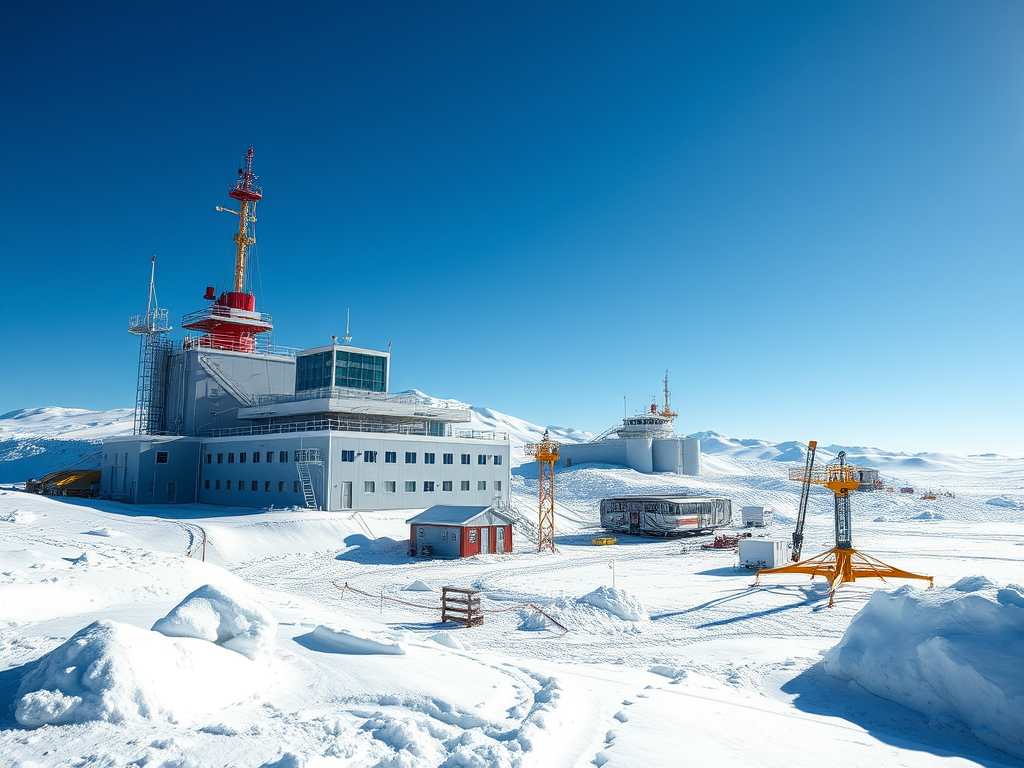
The presence of flamethrowers at the Antarctic research station in the 1982 film The Thing is primarily explained within the movie’s narrative as a practical tool for melting ice and snow. The most logical in-universe reasoning is that the flamethrowers were intended to quickly melt ice buildup on structures, equipment, or machinery, such as helicopter blades or snow-covered roofs, to prevent damage from the weight of accumulated snow and ice. This explanation is supported by the film’s FAQ, which states that the flamethrowers were meant to be used for melting ice if the need arose, a purpose also attributed to the Norwegian base in the prequel. The film’s novelization further specifies that the flamethrowers were needed to melt ice off helicopters and other equipment.
However, real-world Antarctic research stations, such as the U.S. Amundsen-Scott South Pole Station, do not maintain flamethrowers as standard equipment. According to the United States Antarctic Program, flamethrowers are not listed in their material and maintenance tracking software, and they are not considered standard or practical for such environments. The use of military-grade flamethrowers in the film is widely regarded as a cinematic choice rather than a realistic one, likely driven by “Rule of Cool” or the visual metaphor of fire versus ice, which enhances the film’s dramatic tension. The flamethrowers were also used as a plot device to provide a means of combating the alien creature, The Thing, which is vulnerable to fire.
While some sources suggest that flamethrowers might be used for waste disposal or de-icing, these uses are considered impractical or dangerous, as the fuel in flamethrowers can freeze in extreme cold, and the risk of fire in a confined, insulated structure is significant. The film’s depiction of flamethrowers is therefore more a product of dramatic storytelling and visual spectacle than a reflection of actual Antarctic base operations
But if one of these scientific bases WAS invaded by aliens, wouldn’t it be wise to go prepared?
Real-world Antarctic bases are not equipped to defend against hypothetical alien invasions. Their emergency protocols focus on environmental protection, human health, and preventing the introduction of non-native species—often referred to as “alien species” in scientific contexts—such as invasive plants, microbes, or animals accidentally brought by humans.
While space agencies like NASA have planetary protection protocols to contain potential extraterrestrial microbes from returned samples (e.g., Mars or asteroids), these are highly specialized biocontainment measures, not military defenses. There is no official plan for responding to intelligent or hostile extraterrestrial life at any research station.
The idea of preparing for an alien invasion remains in the realm of science fiction. Current Antarctic operations prioritize scientific research, environmental stewardship, and safety in extreme conditions—not combat readiness.
Antarctic Treaty System international treaties concerning Antarctica
Wikipediaats.aq
planetary protection protocols nasa
“But the sentient, likely alien fluid Black Goo was found very close to Antarctica at Thule Island in 1982 by the UK. I was on HMS Yarmouth when we took part in Operation Keyhole on 20th June 1982. It seems we took samples of this back to the UK and Marconi worked on it, causing the deaths of dozens of their R&D scientists. Doesn’t this make the idea of an alien incursion into Antarctica a little more likely?”



 Wirral In It Together